
HOME NOTES / HANDYMAN IN LONDON
Small repairs deserve a clear next step.
Notice the change, describe the problem and decide what needs assessment rather than letting the list disappear.
IN THIS ARTICLE
The same small repair can remain on a household list for months because it still seems usable. A cupboard catches, a curtain bracket feels loose or a tap continues to drip. The difficulty is often deciding what to do next rather than noticing the issue. Recording the location, the change and any photographs makes it easier to arrange an assessment without waiting until several unrelated jobs have become frustrating at once.
Do not turn an observation into a diagnosis.
A mark beside a fitting, a noise from a door or movement in a shelf is useful information, but it does not establish the cause. Note what you can see and when it happens. If the issue has already been adjusted or repaired, keep that history with the description. This is more helpful than choosing a repair method before someone has assessed the item.
Different changes also deserve different priorities. Cosmetic wear and an insecure fitting should not be treated as the same sort of job simply because both look small. Avoid loading or forcing an item that appears unstable or damaged while arranging appropriate help. A repair list should make the practical problem easier to understand, not encourage a series of improvised fixes.
Keep bathroom faults separate from a refresh.
Bathrooms contain finishes and fittings that are used closely together, so it is easy to describe several issues as one general bathroom job. Be specific about water, grout, sealant or a fixture that is not working as expected. A photograph can clarify which fitting is affected and how access is arranged, while a note about recurrence can explain why the issue needs attention.
A cosmetic change is different from investigating a fault. New accessories or a fresh finish should not be used to conceal an unexplained problem. The plumbing repairs information is a useful starting point for water fittings. Work on tiled surfaces or a broader refurbishment may need its own discussion and sequence rather than being assumed to form part of the same repair.

Notice what is happening at the brackets.
Curtains and blinds can remain in use even when their supports no longer feel secure or the fabric does not move as intended. Record whether the issue concerns the pole, track, blind mechanism or the surface around a fixing. The product details and a photograph of the existing arrangement help distinguish a new fitting job from attention to something already installed.
The blind fitting page sets out one type of work that can be assessed. Avoid treating repeated adjustments as an alternative to understanding why a fitting is moving or failing. Weight, product requirements and the wall all matter, and a different support or arrangement may need to be discussed before the work is confirmed.
Describe how the door or cupboard behaves.
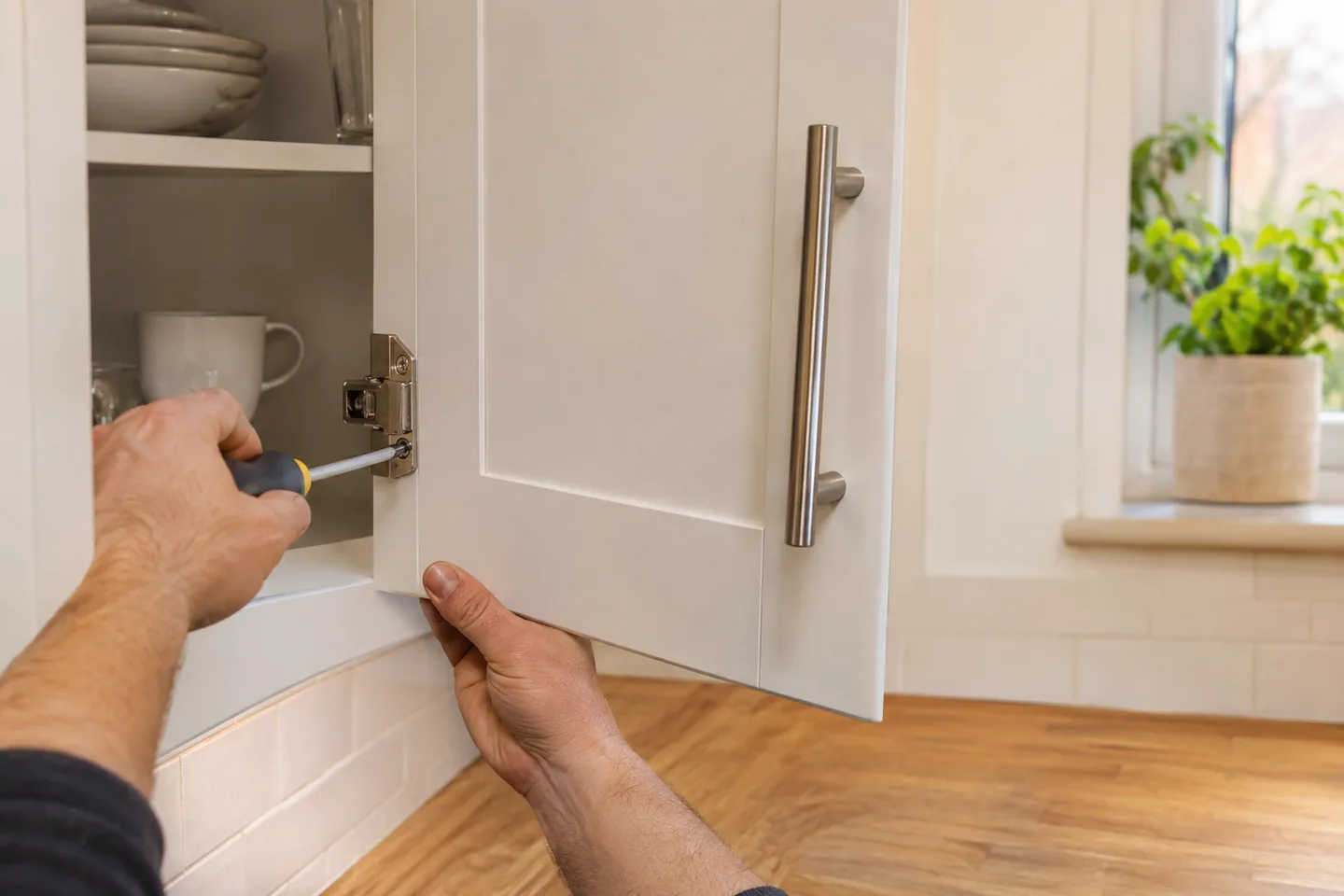
A door that catches in one place and a cupboard whose hinges have become loose may look like similar inconveniences, but the work required can differ. Explain which part moves, catches or no longer aligns, and mention changes elsewhere in the room. Photographs should show both the affected area and enough surrounding context to understand its position.
Keep the material in view too. Suitable timber repairs, adjustments to hinges and work on a damaged laminate surface are not automatically the same service. Ask what can be assessed before booking. A useful description gives the repair a starting point; an assumption that every wooden-looking fitting needs the same adjustment can make the enquiry less clear.

Turn the list into an appointment that fits.
Group suitable small jobs, explain all of them before booking and identify which are the priorities. Include access restrictions and anything already supplied. The person arranging the visit can then discuss the right trade, materials and time to allow. Additional work should be agreed rather than added on the assumption that someone who is already there can take it on.
For the broader planning question, read what a handyman can help with at home. Acting on a small repair does not mean promising a particular saving or predicting what would happen if it were left. It means replacing a vague intention with useful information and the right conversation about the work.