

HOME NOTES / HANDYMAN AND BUILDERS
The right help for a list of small jobs.
What to include in a repair enquiry, and why different jobs may still need different trades.
IN THIS ARTICLE
A household to-do list rarely stays within one trade. It may include a wardrobe in boxes, a sticking internal door, pictures waiting to be hung and a tap that has begun to drip. The useful question is not whether one person can do everything. It is how to describe the work so that the right help can be arranged. That is the practical role a handyman service can play in looking after a home or workplace.
01
Recognise the work on the list.
Assembly, fitting, mounting and adjustments to suitable woodwork are among the jobs commonly discussed with a handyman. They can involve a single item or several rooms, but they still need clear details. “A few things around the house” does not say whether the work concerns furniture, the building or a faulty fitting. A room-by-room description makes the conversation more productive.
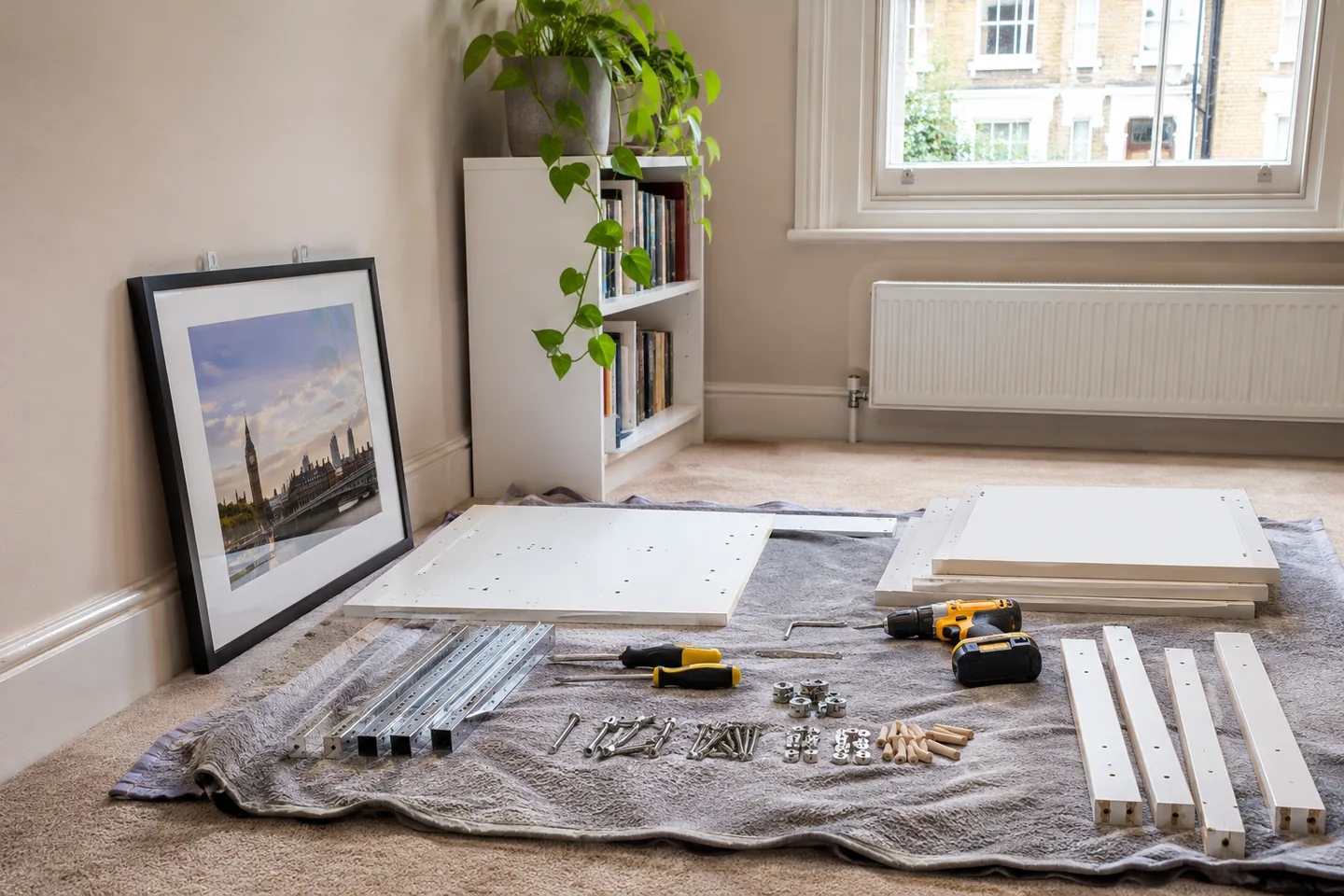
The furniture assembly information illustrates why product details matter. Different wardrobes, beds and desks have different components and handling needs. The same principle applies to a wall fitting or an internal door: the material, dimensions and existing condition are part of the work, not optional details that can always wait until arrival.
02
Keep specialist work visible.
Plumbing and electrical tasks should be identified separately when making an enquiry. A list that includes a mirror, a shelf and a faulty light is not just a list of three wall jobs. Each item has its own requirements, and a suitable specialist may need to be booked. Describing the fault is more useful than assuming it belongs under a general odd-job rate.
More substantial building work also needs its own assessment. A small adjustment to an existing fitting and a project that alters the building are not interchangeable simply because they affect the same room. Ask what information is needed and who should assess it. Avoid assuming that a convenient combined appointment means every trade, material or type of alteration is included.

03
Make the enquiry specific enough to plan.
Include photographs, product references and the intended position of new items. Mention anything already bought and whether a fitting is missing or damaged. For a partly completed job, explain what has been attempted and what is happening now. This gives the person arranging the work a clearer picture than a brief description of the result you hope to achieve.
Access matters as well. Stairs, lift restrictions, parking and the amount of space around the job can affect planning. In a rental or managed property, establish who can authorise work and answer questions. If drilling or an alteration needs permission, have that conversation before the appointment rather than leaving the installer and occupant to resolve it on arrival.
04
Bring suitable tasks together.
There can be a practical advantage in discussing several small jobs at the same time. A bedroom might need furniture assembled and a curtain pole fitted; an office might need desks built and pictures positioned. Present the complete list before booking and explain which tasks matter most. That allows the work to be considered as a visit rather than a sequence of unmentioned additions.
The mix of tasks can still require another technician, materials or a separate trade. A heavy item may need different handling from a small shelf. A change to the agreed list should therefore be discussed, not treated as automatically included because someone is already at the property. Clear priorities help when deciding what the appointment is intended to achieve.
05
Understand what is being agreed.
Check the published rates and booking conditions and ask which apply to the work being discussed. Labour, materials, sourcing and additional expenses are separate considerations. Avoid treating a general hourly figure as a fixed price for an item that has not been assessed. The product, condition, access and appointment time can all be relevant.
After the work, review what has been completed and retain any useful product or material details. For a closer look at recurring small jobs, read the article on postponed repairs. Good support begins with a clear description and a realistic plan; it does not depend on promises that one visit will solve every issue in a property.
Different work needs different information
| Type of request | Useful starting information | What to clarify |
|---|---|---|
| Assembly or fitting | Product details, dimensions and access. | Parts supplied, positioning and handling. |
| Plumbing or electrical fault | Description of the fitting and what is happening. | The appropriate specialist and applicable rate. |
| Several small jobs | A complete prioritised list. | Which tasks can be planned together. |