
LIGHT, PRIVACY AND A NEAT FINISH
Blind fitting
in London
We measure and fit blinds for homes and workplaces across London and the M25. From a single roller blind to several different windows, we review the product, the opening and the fixing positions before installation. Send your blind details and window photographs so we can plan the work.
Tell us what is being fitted and where it will go.
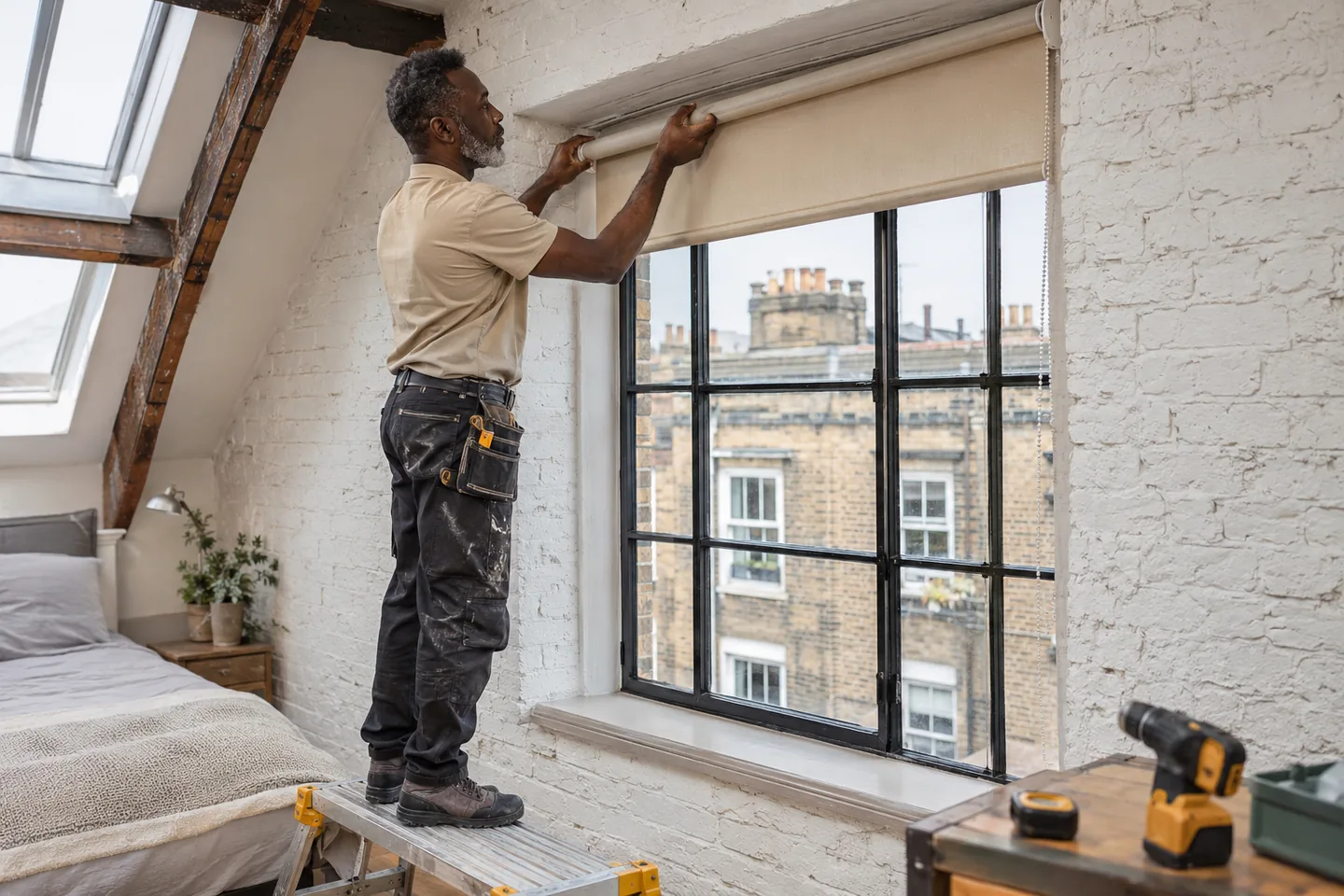
FIT. CHECK. FINISH.
A clear position before the first fixing.
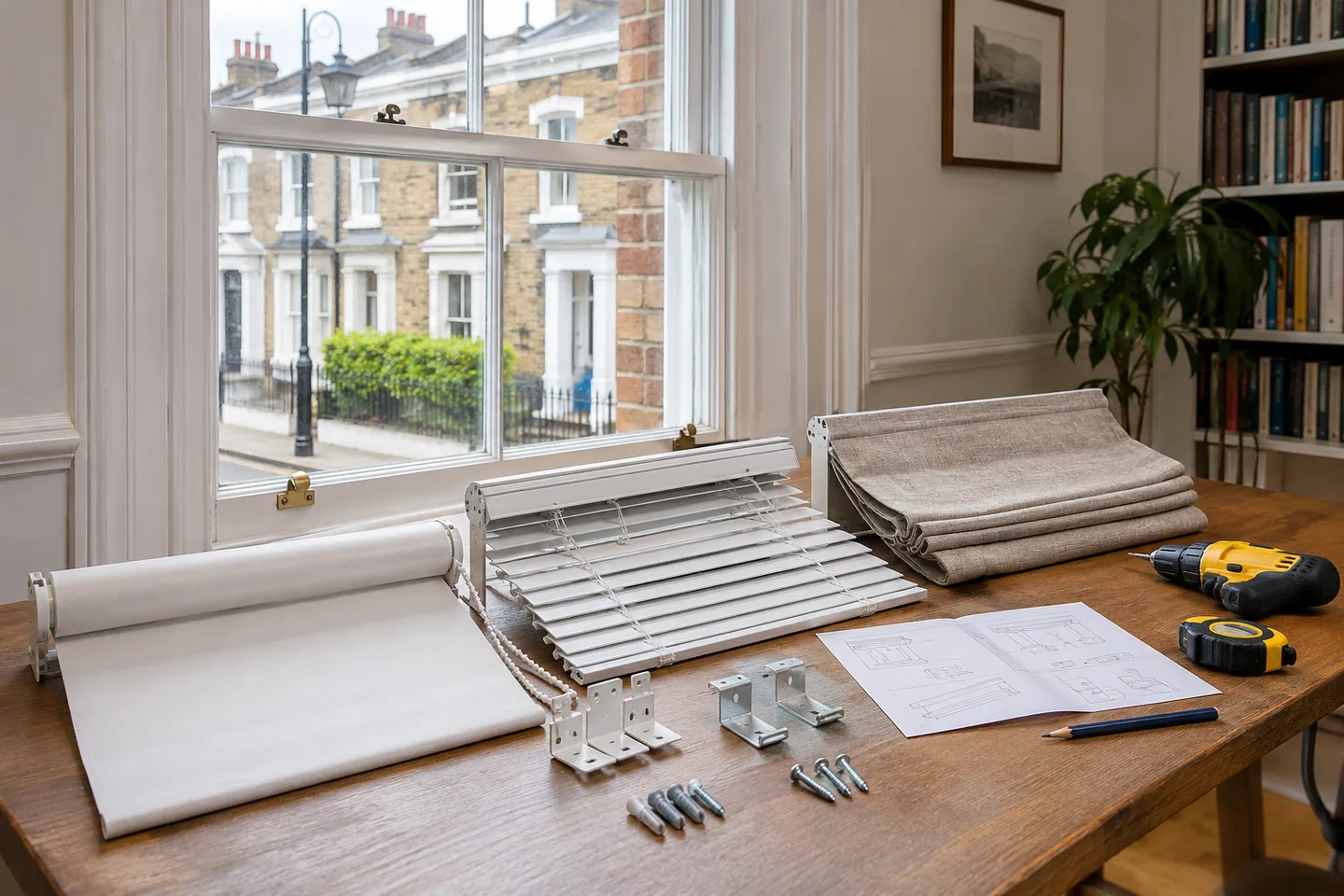
The blind and the window belong together.
We install roller, Roman, Venetian, vertical, pleated, Velux and custom-made blinds. The fitting arrangements vary between those designs, and the width alone does not describe the job. We discuss the blind’s system, the window opening and the intended position so the installation can be planned around the actual product.
For a replacement, we ask whether an old blind is still fitted and whether its fixings are to be removed. Existing bracket positions may not match a new system. We assess the surface rather than assume the same holes or supports can be used. Photographs of the opening and the current fitting are useful before the appointment.
Our service covers both smaller blinds and designs wider than a metre. Wider or awkwardly positioned products may change the handling or access needed. Tell us about tall windows, furniture beneath the opening and anything that prevents a clear approach. We can then discuss the practical work before confirming the visit rather than discover an inaccessible fitting position on arrival.
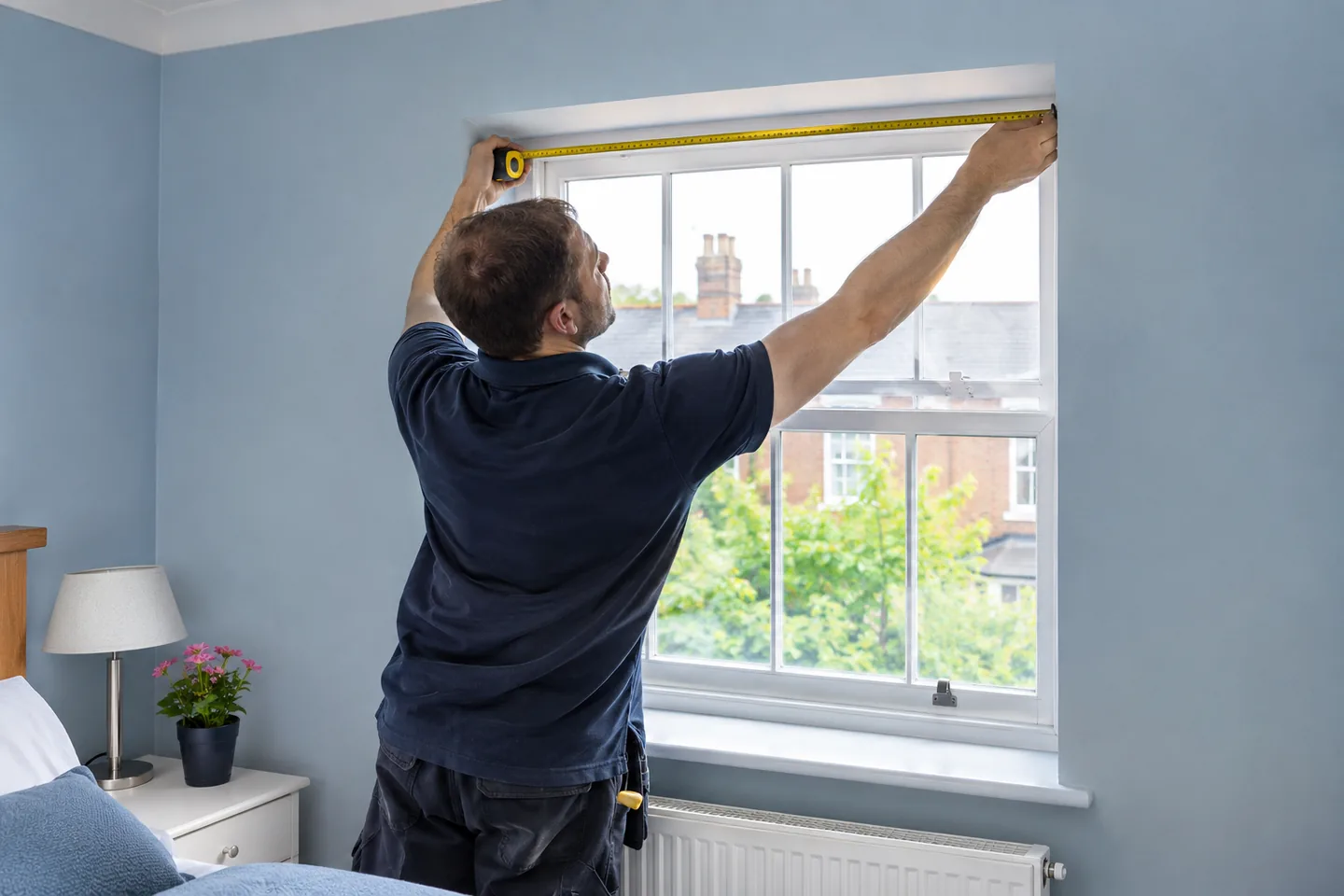
Measuring for the intended fit.
We review the window dimensions and the proposed fitting position. A blind mounted within a recess has different considerations from one positioned outside it, including the relationship to handles, opening sections and nearby fittings. We check those details with the product instructions and the result you want from the blind.
If you have already purchased the blind, send its dimensions and make or model. If it is being made to order, discuss the fitting information before the product is finalised. The supplied brackets, controls and installation instructions all help establish what the work requires. We distinguish a measurement enquiry from a confirmed installation of an available product.
The purpose of the blind also matters when agreeing its position. Privacy, controlling glare on a screen and managing daylight around a desk can lead to different preferences. We discuss the practical effect with you, then confirm the chosen location before making fixings. This is particularly useful where several windows in one room need an arrangement that looks consistent.
Blind systems we assess
| System | Work we discuss | Information that helps |
|---|---|---|
| Roller and Roman | Installation and suitable cutting or restringing requests. | Product details and the complete control arrangement. |
| Venetian, vertical and pleated | Bracket positions, movement and clearances. | Opening dimensions and the intended fitting position. |
| Roof-window and custom-made | Compatibility and access for the particular system. | Window and product model information. |
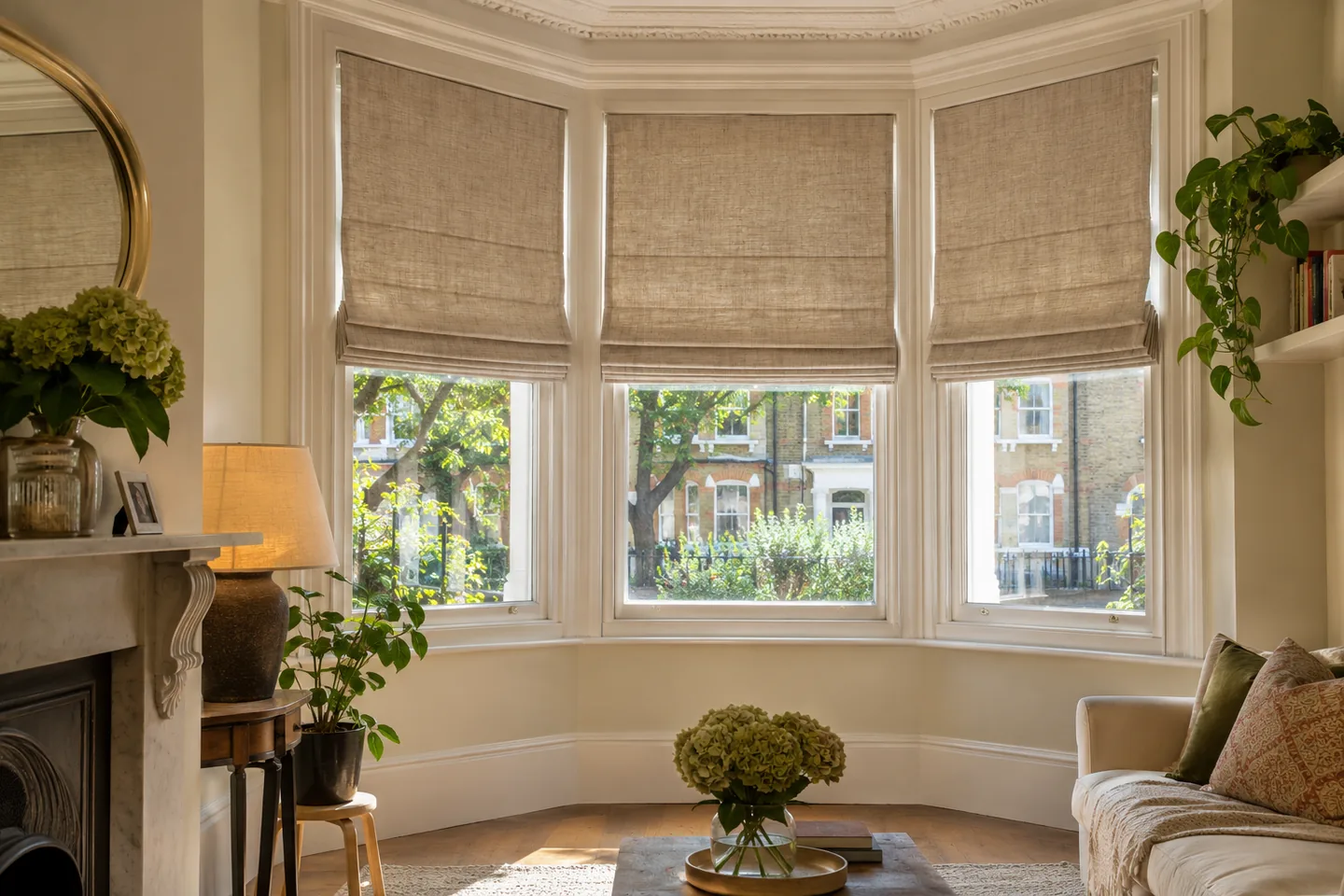
More than a straight opening.
We fit blinds in bay windows as well as ordinary straight openings. The shape of a bay means that adjacent blinds, brackets and controls need to be considered together. We ask for photographs that show the whole bay, rather than a close view of one pane, so the proposed installation can be discussed properly.
For roof-window blinds, including suitable Velux systems, the product and window details are important. We need to know the relevant model information and what has been supplied. A blind intended for one system should not be assumed to fit another because the visible opening looks similar. Access to a high or sloping window also needs to be explained when booking.
Where shutters are being fitted to a bay window, we discuss that request as its own installation rather than an interchangeable blind type. Dimensions, supplied components and the condition of the fixing surfaces affect the work. We review the product and the building before agreeing the approach, with any special handling or access arrangements discussed in advance.
Cutting and adjustments, where suitable.
Our listed work includes cutting suitable roller blinds to size and restringing Roman blinds. We assess the particular product before confirming an alteration. Construction, the control arrangement and the manufacturer’s design affect what can be adjusted; a width written on a label does not establish that every component can be shortened or reused.
Please describe the problem if you are requesting an adjustment rather than a new installation. A blind that catches, sits unevenly or has a damaged cord may need different attention from a product that has never been fitted. Photographs of the mechanism and the complete blind help us discuss the request without confusing an installation with a repair.
After fitting or an agreed adjustment, we check the blind’s movement and position. We look at how it raises, lowers or traverses according to its design, and whether it clears the surrounding window furniture. If an issue relates to a damaged or missing proprietary component, we explain it rather than promise that every part can be replaced during the same visit.
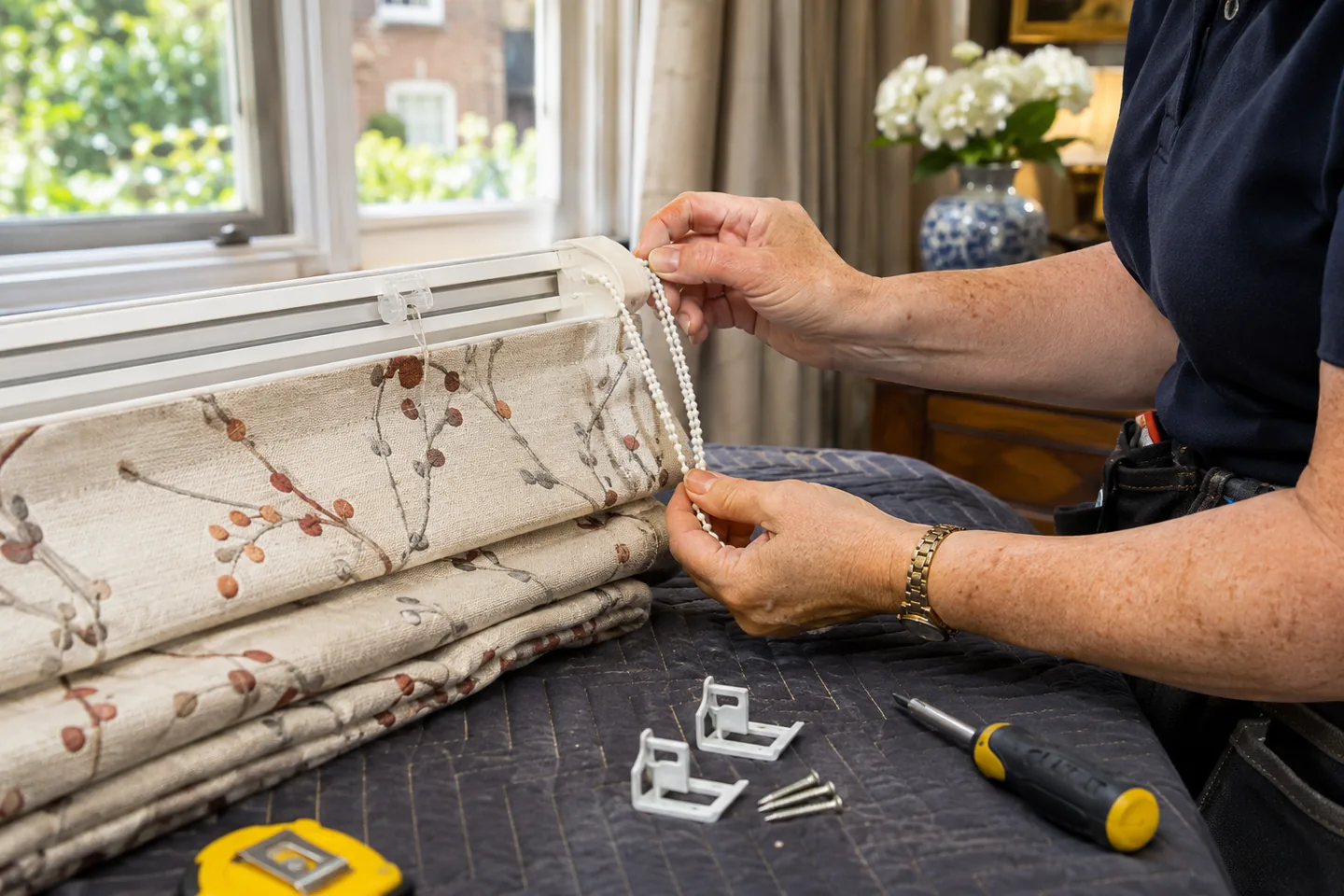
Window details before booking
| Window arrangement | What we review | Why it affects the visit |
|---|---|---|
| A recess | Handles, opening sections and available fixing surfaces. | The blind must fit and operate in the agreed position. |
| A bay | Adjacent units, angles and controls. | The whole arrangement needs to work together. |
| A high or sloping opening | Access to brackets and the product system. | Different access or handling arrangements may be needed. |
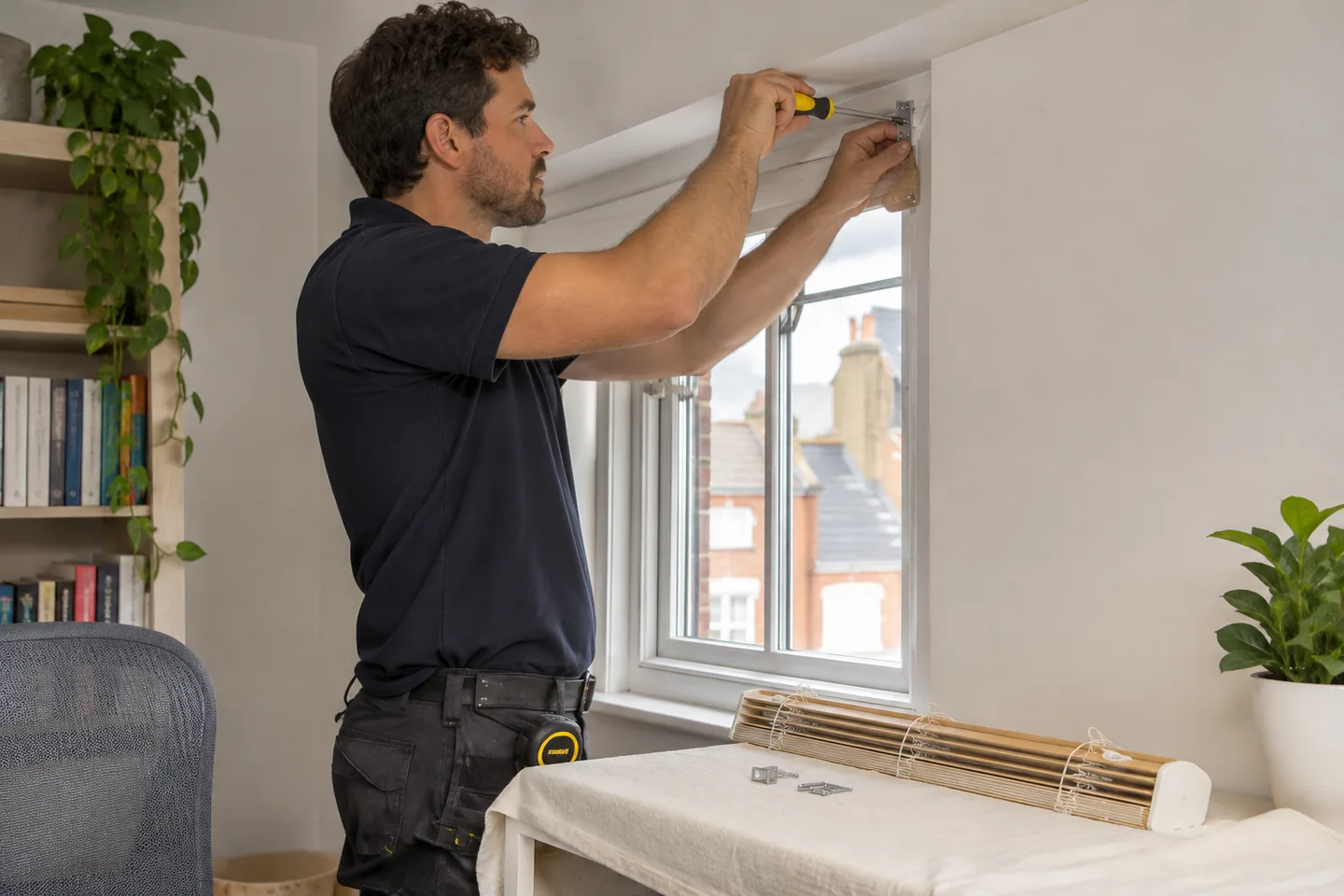
A clear window and a careful installation.
We bring tools for the agreed work and review the fitting positions with you before starting. We protect the immediate working area as appropriate, check the supporting surface and use a fixing arrangement suited to the product and construction. The brackets need to support the blind and allow it to operate in its intended position.
We plan access to the fixing points rather than work around an unexpected obstacle. A desk, bed or fragile item directly beneath a window may restrict safe positioning, and a high ceiling can require different arrangements. Tell us about those conditions when enquiring. In a managed building, any restrictions on drilling or working hours should also be explained.
For blinds with cords or chains, we follow the supplied installation and safety arrangements and discuss the control position. Cordless designs are an option mentioned by our service for homes with children. We do not treat a child-safety component as a decorative extra. Let us know the product being fitted and keep all the supplied parts with it.
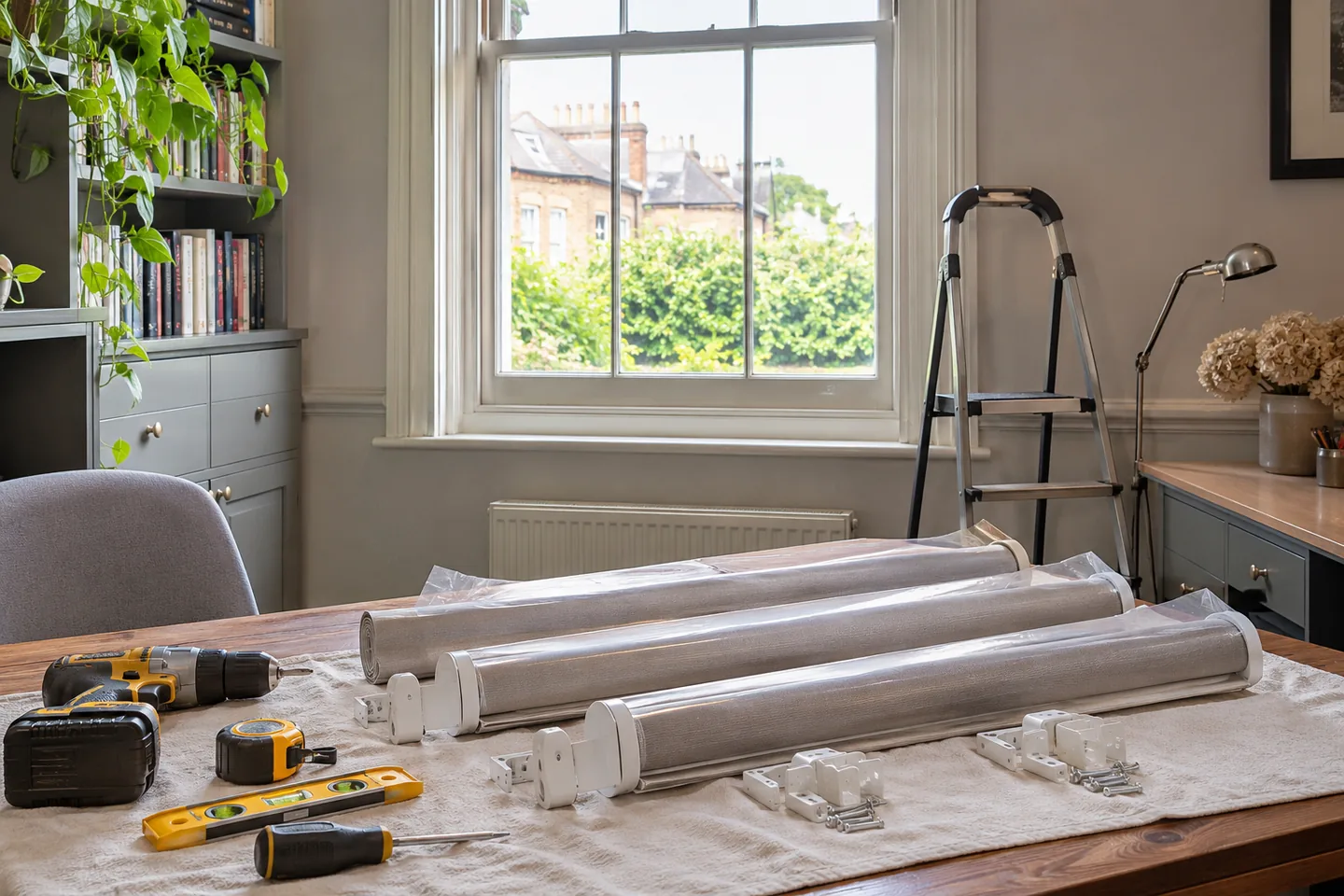
Useful preparation for homes and offices.
We fit blinds in occupied homes, rented properties, offices and other suitable workplaces. In a home, the main arrangements are access to the window, the product being ready and someone available to agree the position. In an office, working areas and the effect of drilling or access equipment on nearby users need discussion too.
Tenants should obtain any necessary permission for new fixings. Property managers can provide a window-by-window list, product references and the person who can approve the installation. If you are not attending, arrange how positions and any changes will be confirmed. A fitting preference should not have to be guessed because the decision-maker cannot be reached.
Materials and replacement components are separate from the labour charge, so explain what is already supplied. Keep brackets, controls and instructions together, even when several blinds have arrived in similar boxes. A labelled list connecting each product with its room helps us avoid confusion when a whole property is being fitted.
- Photographs showing each window and the surrounding access
- The blind type, dimensions and product information
- A list of rooms and the blind intended for each opening
- Any existing fitting, damaged mechanism or permission requirement
A working blind and a finished room.
We check the completed installation with you, including position, clearance and the normal operation of the blind. On a set of windows, we also review the relationship between the fitted units. A neat installation should work as a group while still allowing each product to move as its design requires.
If you are planning more than blinds, tell us before the appointment. We can discuss combining the visit with curtain pole or track fitting, particularly where a room uses both treatments. The fixing requirements and access arrangements may differ, so they need to be included in the initial list rather than assumed to be covered by one blind installation.
Smaller room-finishing jobs, such as picture hanging, can also be considered. We review the complete list and explain whether the same visit is suitable. Extra tasks, heavy items or another trade can affect the booking; we do not promise that every combination can be completed by one person within a fixed amount of time.
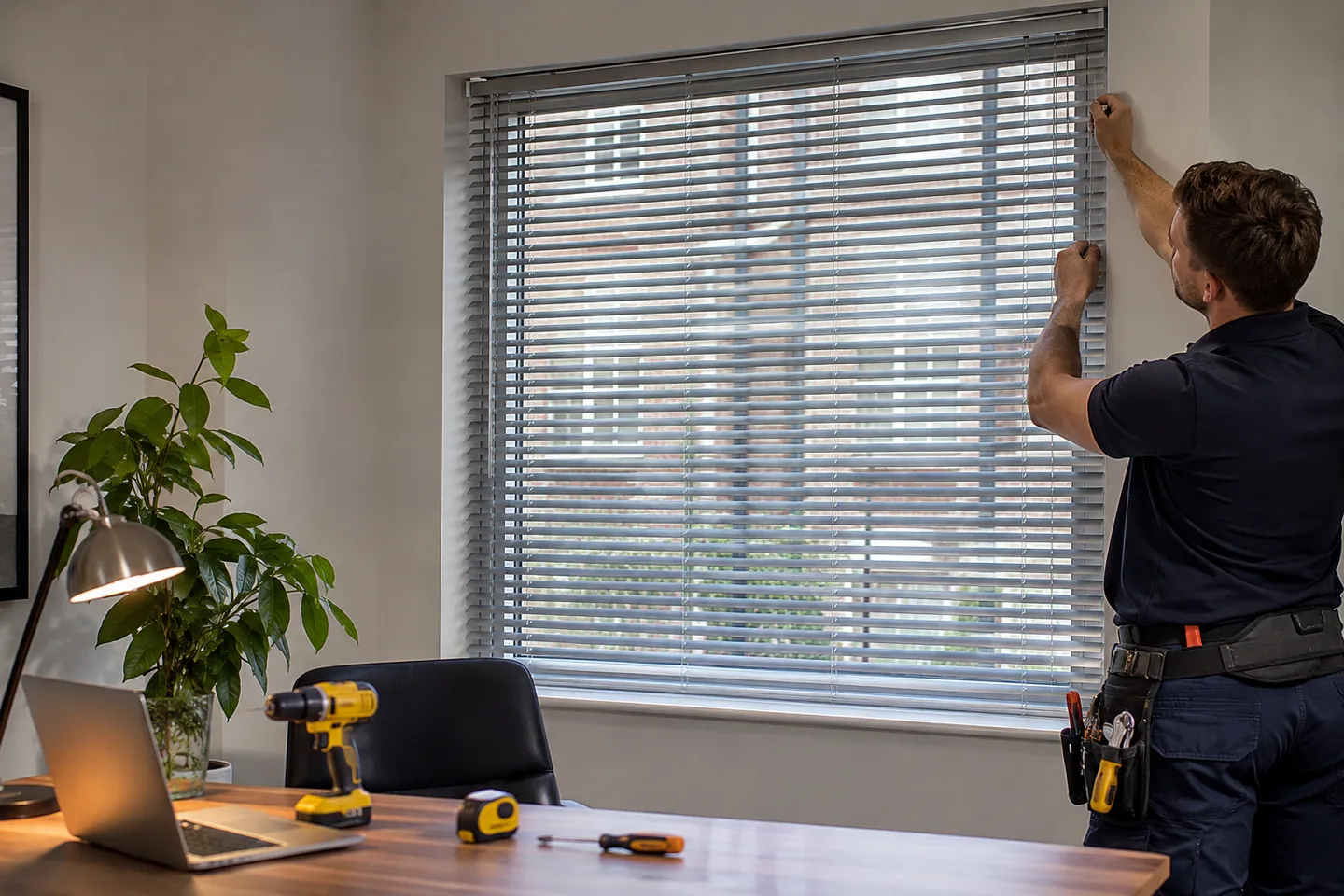
Booking the work, not a guessed duration.
The type and quantity of blinds, the windows, any alterations and the access involved affect the appointment. We discuss those details before arranging it. A single product in a clear opening is a different request from a bay or a property with mixed systems, so we do not attach one standard fitting time to every blind.
The published standard weekday handyman rate, Monday–Friday from 8am–6pm, is £83 for the first hour with a one-hour minimum. Subsequent half hours are £36. The listed half-day rate is £256 for up to four hours and the full-day rate is £456 for up to eight hours. Weekend and out-of-hours rates differ; the complete prices and conditions show the relevant time bands.
Labour includes taxes. Blinds, other materials, replacement parts and additional expenses are separate. If material sourcing is agreed, the published handyman charge is £49 per hour plus the cost of the materials. Parking is added if incurred and congestion costs may apply where scooter attendance is not possible. For cancellation or rearrangement, the published policy requests at least 48 hours’ notice.
Installation or an adjustment?
| Request | Useful detail | What we confirm |
|---|---|---|
| New fitting | The blind is supplied with brackets and instructions. | Positions, access and installation requirements. |
| Replacement | An old unit and existing fixings are present. | Removal and the suitability of new fixing points. |
| Alteration | A roller width or Roman control needs attention. | Whether the product is suitable for the proposed work. |
Planning this work at a London address?
Read the area notes for Canary Wharf and Stratford, or check our London and M25 coverage. Send your full postcode with the job details so we can review the work, access and relevant trade before arranging a visit.
BEFORE YOU ARRANGE THE VISIT
A few practical answers.
Can you fit blinds supplied by me?
Yes. Send the type, dimensions and product information, then keep the supplied brackets, controls and instructions together. We review the installation requirements and the window before confirming the work rather than assume every product uses the same fixings.
Can you cut a roller blind to fit my window?
We assess suitable roller-blind cutting requests. The product construction and mechanism determine whether the proposed adjustment is possible. Send the model and current dimensions before booking so the work can be discussed before the item is altered.
Do you install blinds in bay windows?
We fit bay-window blinds and need photographs showing the whole arrangement. The adjacent units, angles and controls affect the installation. Include the supplied product details so we can discuss the fit and access for each part of the bay.
Can you repair the cord on a Roman blind?
Our listed work includes Roman-blind restringing. Describe the fault and send photographs of the complete blind and mechanism. We need to assess the condition and required components before confirming that the proposed repair can be carried out.
Do I need to be there to choose the fitting position?
Arrange for someone to confirm the intended position and answer questions, or agree clear instructions and a contact in advance. This matters for privacy, clearances and the relationship to the window. We should not have to guess a preference during installation.
Can I book several rooms together?
Yes, send a room-by-room list with the blind allocated to each window. We discuss quantities, product types, access and any alterations before arranging the appointment. A mixed installation may need more planning than several identical blinds in clear openings.
TELL US WHAT NEEDS DOING
Let’s plan
your visit.
Send your postcode, photographs and the full job list. We’ll discuss the work and the relevant booking arrangements.