
HOME NOTES / HANDYMAN AND BUILDERS, HANDYMAN IN LONDON
A bathroom refresh, with a clear plan.
Keep what works, identify what needs repair and choose a small number of useful changes.
IN THIS ARTICLE
A bathroom can look tired even when much of it is still useful. The temptation is to replace several things at once without separating a cosmetic change from a fault. A better starting point is to list what works, what needs attention and what you would simply like to look different. That helps a limited budget answer the room’s actual needs instead of becoming a collection of unrelated purchases.
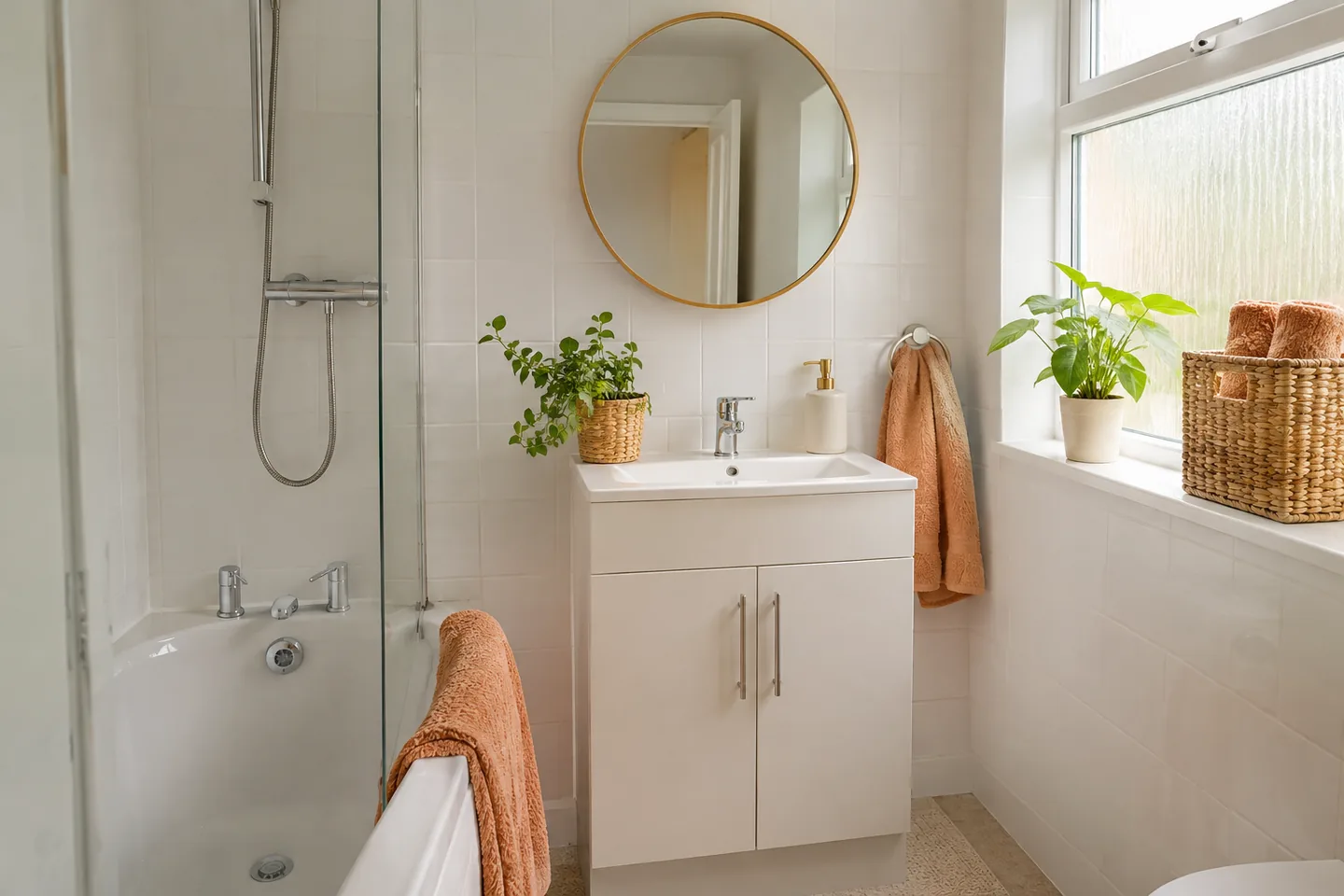
Choose fittings for the existing room.
A new tap, showerhead or accessory can change the appearance of a bathroom, but it still needs to suit the existing installation. Before choosing a replacement, consider the current fitting and the information an installer will need to assess it. A product photograph alone does not explain the connections, access or work involved in changing it.
The plumbing repairs and installations page is a useful starting point when discussing water fittings. Keep an active fault separate from a decorative preference. A drip or unexplained water around a fitting needs assessment rather than being treated only as a reason to buy something in a different finish. That distinction also makes it easier to describe the job clearly.
Look at the condition before the finish.
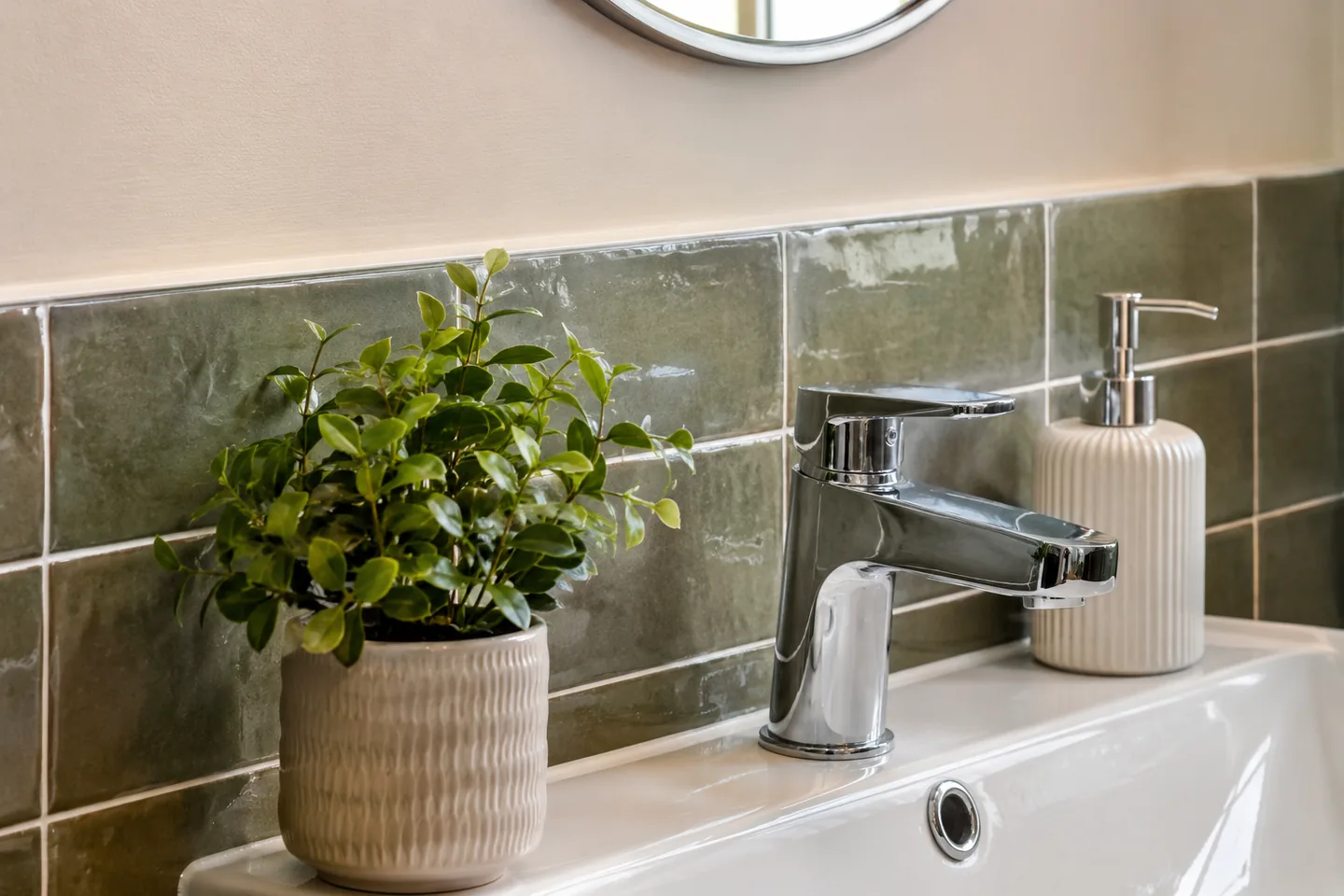
Tiles and painted surfaces occupy much of the visual space in a bathroom. There are ways to consider a different appearance without replacing everything. Any proposed coating, panel or decorative treatment still needs to suit the surface and its intended use. A finish should not be used to conceal loose tiles, damaged backing or a problem that has not been understood.
If a tiled area needs repair or replacement, assess the existing condition and the proposed material together. The tiling service information explains the work to discuss. Keep photographs and measurements available. A small area can involve preparation and finishing details beyond the number of tiles visible from the doorway, so the job should not be judged from appearance alone.
Make room for the things you actually use.
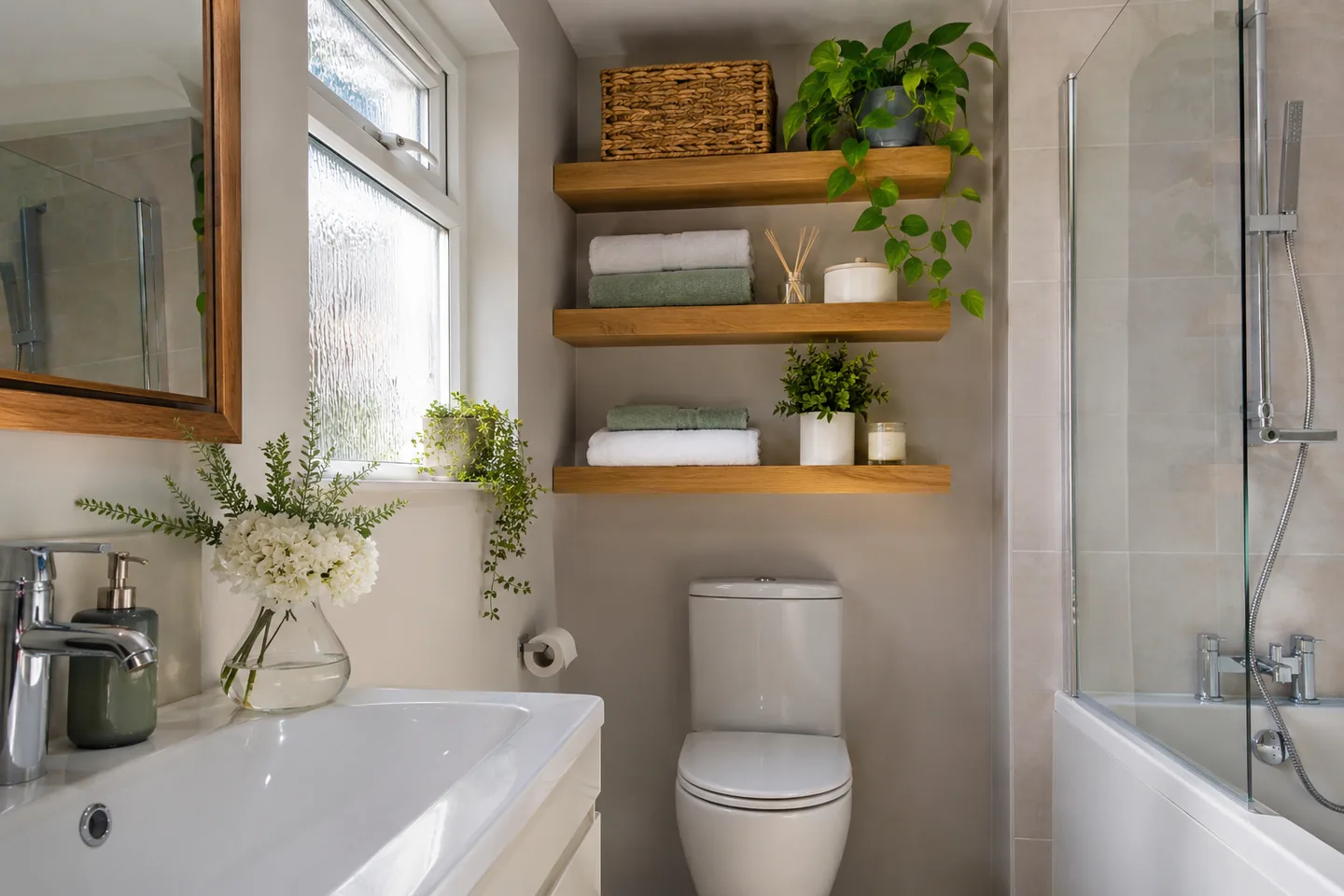
Storage can make a bathroom feel calmer when it provides a place for everyday items instead of simply adding another unit. Consider what needs to remain accessible, what can go in a drawer and which surfaces you would prefer to keep clear. A corner shelf, a cupboard or a mirrored cabinet answers different needs; the largest option is not automatically the most useful.
Wall-mounted storage also needs suitable support and a position that works with doors, fittings and movement through the room. Before buying, note the unit’s dimensions and where it will stand or hang. A plan that looks neat on paper can become awkward if a cupboard door conflicts with a nearby fitting or makes routine cleaning difficult.
Use a few details to bring it together.
Towels, a shower curtain and a small number of accessories can introduce colour without changing the underlying fittings. Choose a relationship between the finishes rather than trying to match every item exactly. Keeping some surfaces clear often allows a modest change to be noticed more than adding several competing patterns or objects.
Light, mirrors and the position of storage affect the way those choices appear. Any change to fixed electrical fittings should be discussed with the appropriate specialist and considered as installation work, not simply a decorative swap. Keep the room practical: an accessory should not obstruct access to a fitting or make the space more difficult to use.
Agree the work before the final purchases.
If more than one change is planned, discuss the sequence. Plumbing, tiling, storage and decoration may involve the same surfaces and different trades. Confirm what materials are already supplied, what needs to be selected and whether a viewing is required. This is more useful than assuming every small-looking change fits into a single standard visit.
For a related approach to the wider home, read the article on practical comfort upgrades. The aim is not to make every bathroom look newly refurbished. It is to spend effort where the room needs it, retain sound features and bring the selected changes together in a finish that is easy to live with.