
HOME NOTES / HANDYMAN AND BUILDERS, HANDYMAN IN LONDON
A fresh look for the room you use most.
Start with what is already working, then choose the changes that make the room feel more settled.
IN THIS ARTICLE
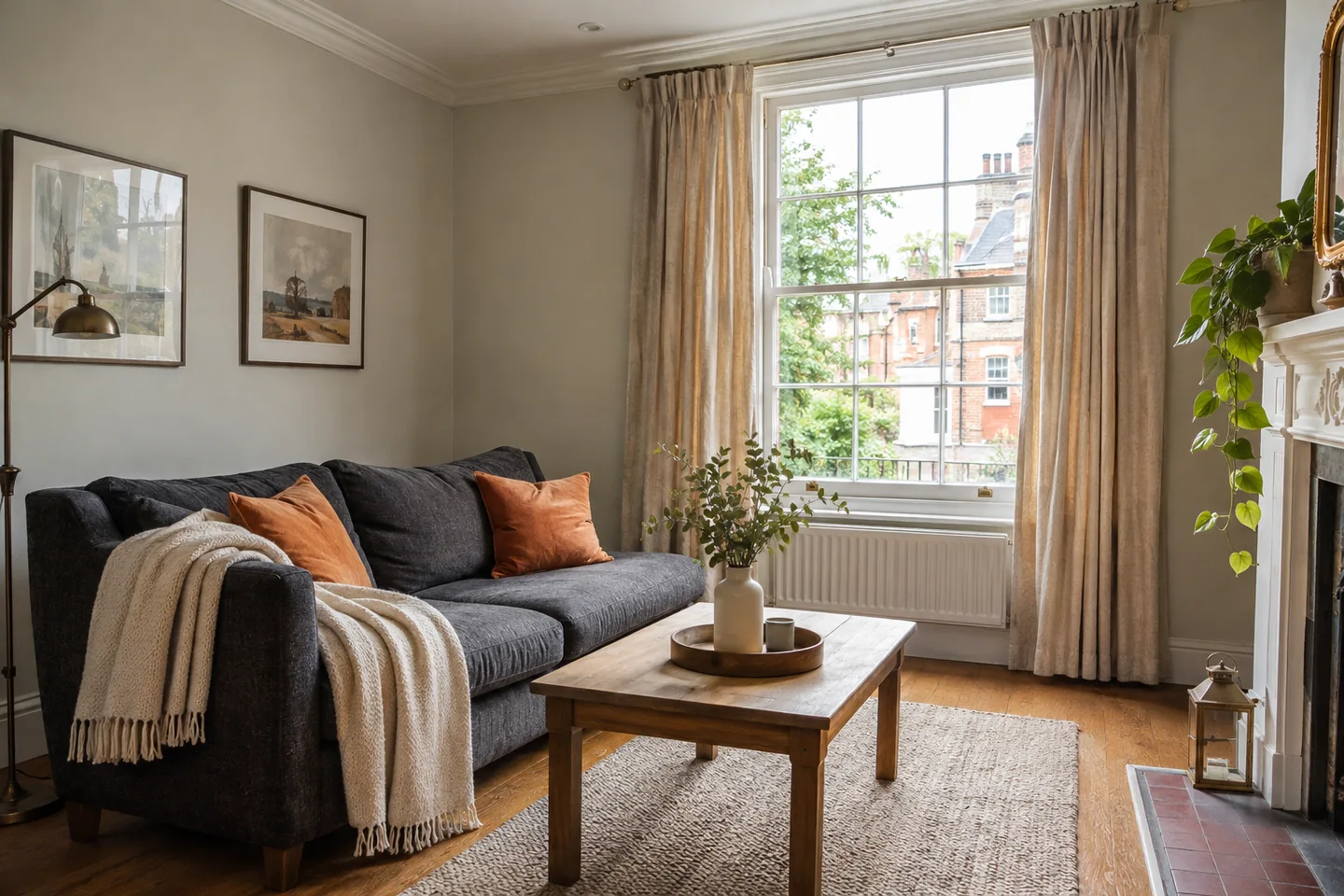
A living-room refresh can become expensive when every item is treated as part of the problem. Before replacing things, look at what still works: a comfortable sofa, a useful cabinet or a colour you already enjoy. Curtains, flooring, mirrors, plants and artwork all offer possibilities. They are separate choices, not a checklist that requires buying all of them. A more selective plan gives each change a reason to be there.
Let the windows guide the first decision.
Curtains occupy a large visual area, so a change of fabric, pattern or colour can alter the balance of the room. Consider them alongside the sofa, walls and the light reaching the space. A heavy-looking treatment may not be right for every window, while a very light fabric may not provide the effect you want. Keep the practical use of the room in mind.
Before a new pole, track or blind is fitted, the opening, bracket positions and nearby furniture need attention. The aim is not simply to copy a photograph in which the curtain happens to sit high above the frame. For the installation details to discuss, see curtain hanging and fitting. Good positioning should work with the actual window and the way the fabric will move.
Decide whether the floor needs replacing.
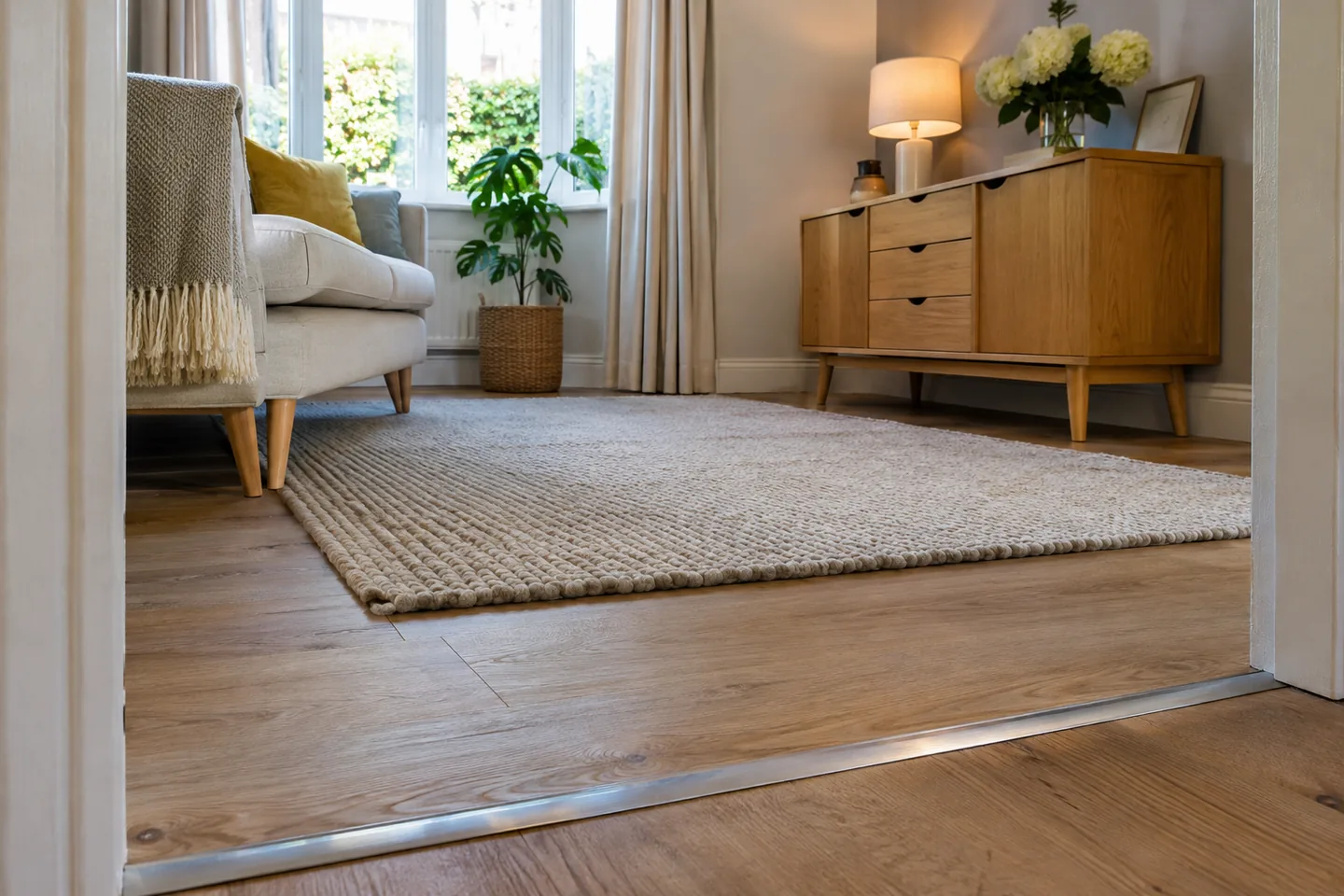
The floor provides a backdrop for the furniture and can strongly influence the feel of the room. That does not mean replacement is always the first choice. A rug, a different arrangement or a clearer area of floor may answer a need for texture or visual calm without beginning a fitting project. Look at the condition of the existing surface before deciding what change is needed.
If new flooring is being considered, account for thresholds, skirting, the current surface and how the room will be cleared. The floor fitting information explains the service available. Material and installation choices belong together; a finish selected from a small sample still needs to suit the room and the work required beneath it.
Use a mirror for what it reflects.
A mirror can become a focal point, but its reflection should be part of the choice. Look from the seating area and from the route into the room. A position that reflects an appealing window or a considered arrangement may work differently from one that repeatedly reflects an untidy corner. The frame and scale should also relate to nearby furniture.
Mounting has its own practical requirements. A large mirror needs supports suited to its weight, existing fittings and the wall. Its position should therefore be discussed before installation rather than adjusted through repeated fixing attempts. A mirror is most useful when the visual plan and the means of supporting it are considered as one decision, not as separate stages after purchase.
Add texture without filling every surface.
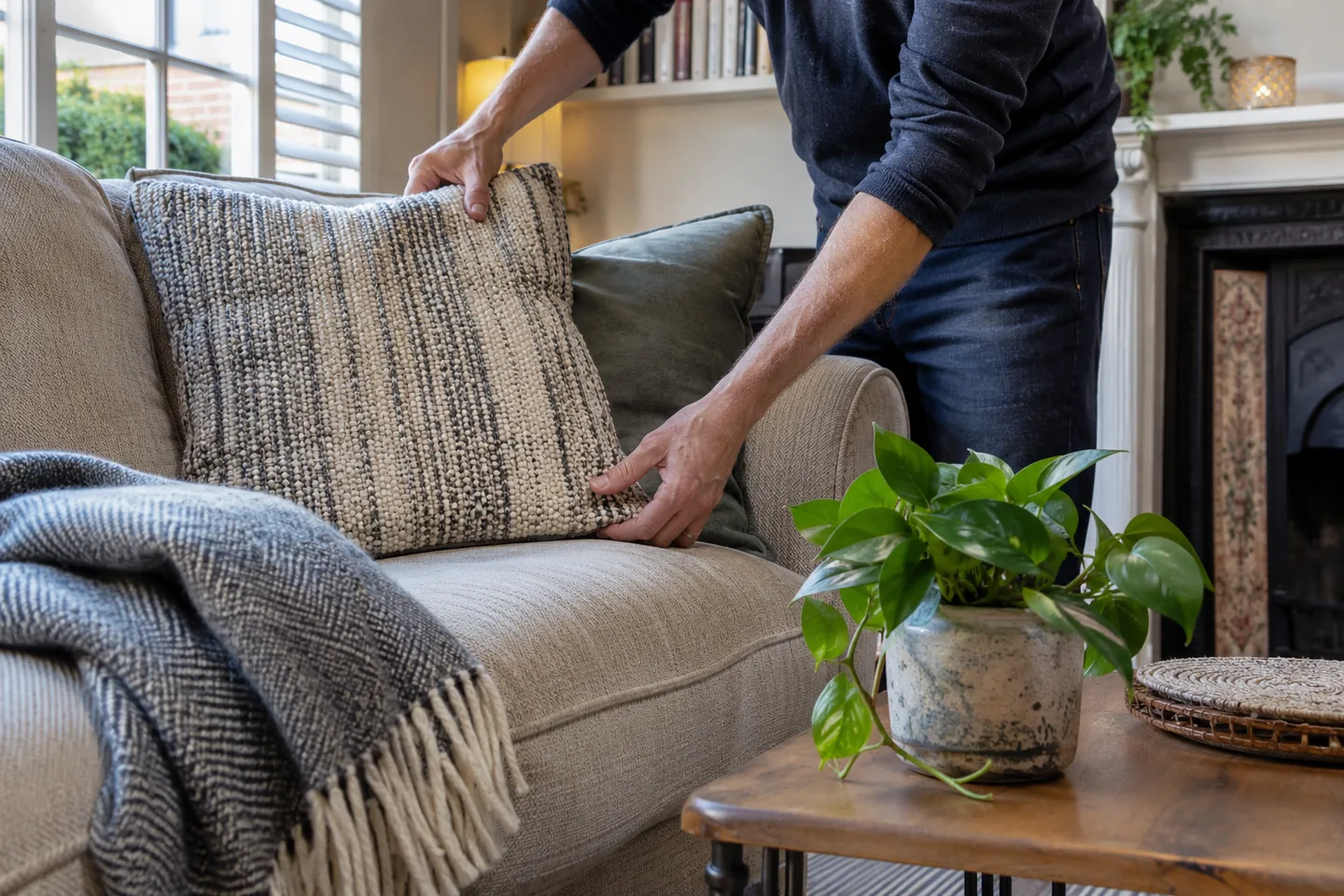
Plants, cushions, throws and a rug can change the feel of a room without changing its layout. Start with a small number of additions and consider how they relate to the pieces already there. More variety does not automatically create a more comfortable room; leaving some clear space allows the materials and objects you choose to be seen.
Lighting and accessories also need to work around daily use. A side table still needs room for the things you actually put down, and a shelf should not become difficult to use because it has been arranged only as a display. Keep the first version of the refresh simple enough to live with before adding another layer of objects or finishes.
Give personal pieces a deliberate place.
Pictures and photographs can provide the detail that makes a room feel like yours. Consider the group as a whole: its relationship to the sofa or cabinet, the gaps between pieces and the amount of surrounding wall. Matching every frame is not essential, but an arrangement benefits from a clear intention rather than filling spaces one at a time.
For more on this part of a room, read the wall-upgrades article. Before arranging installation or decorating, decide which changes matter most and discuss any work on the same surfaces together. A refresh should improve the room you already use. It does not need to turn it into an entirely different place or depend on replacing every familiar piece.