
HOME NOTES / WALLS & FINISHES
Simple wall upgrades.
A different room.
Transform Your Walls: Easy Upgrades That Make a Big Impact
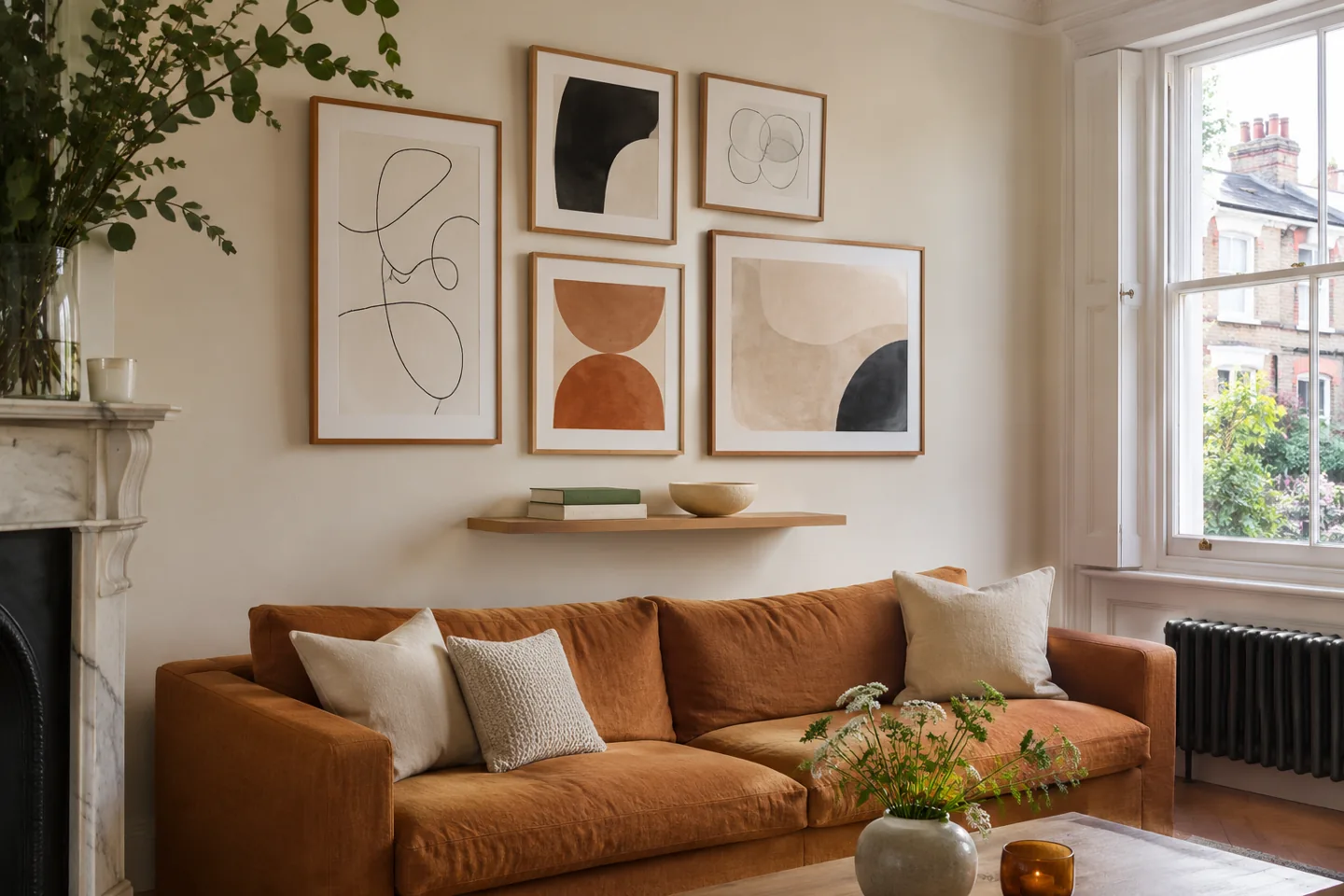
Walls do more than divide a home into rooms. They hold the everyday things you want within reach and the pictures you want to see. A bare wall can leave a room feeling unfinished; too many competing shelves and frames can make the same room feel busy.
Three changes are worth considering: useful shelving, a fresh paint finish and well-positioned pictures or mirrors. These ideas work best when treated as parts of one room. The aim is not to fill every gap. It is to give the wall a clear purpose and leave enough space for the room to feel settled.
USEFUL SPACE
Shelving that earns its place.
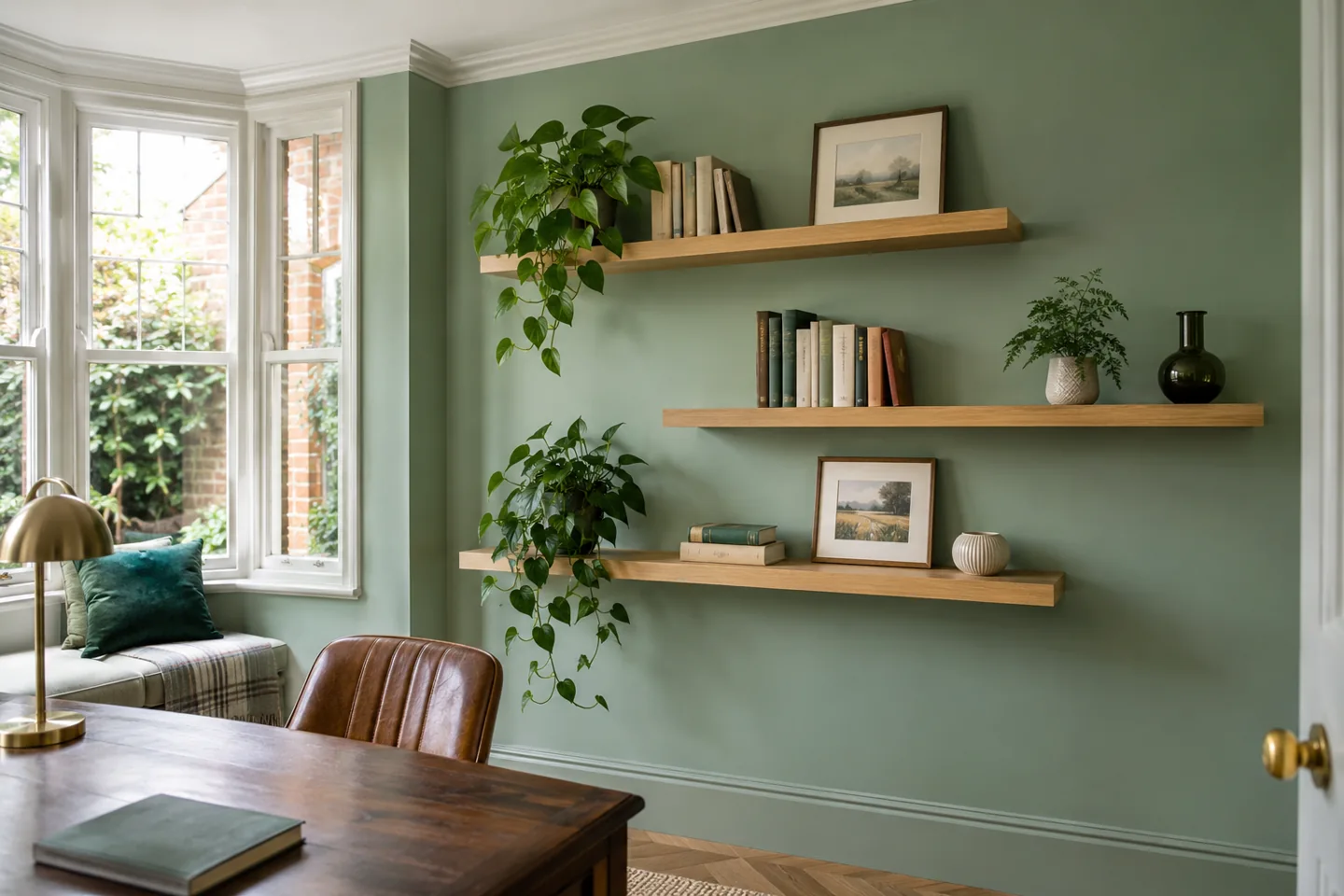
Floating shelves, corner units and wall-mounted storage can make use of an overlooked wall without adding another freestanding piece of furniture. Books, plants and frequently used items all need different amounts of space, so the useful starting point is what the shelf will actually hold.
The arrangement should work with the furniture below it. A shelf over a desk serves a different purpose from a small display beside a reading chair. Leaving some gaps between objects helps the wall remain readable instead of turning it into a narrow storage cupboard without doors.
Installation still matters. A straight-looking shelf needs a fixing method suited to the wall and the load; plasterboard, masonry and other surfaces do not all accept the same fittings. Heavy storage is worth discussing with an installer before buying it. Our unit and shelf mounting information explains the service available.
A CHANGE OF COLOUR
A fresh finish,
without filling the wall.
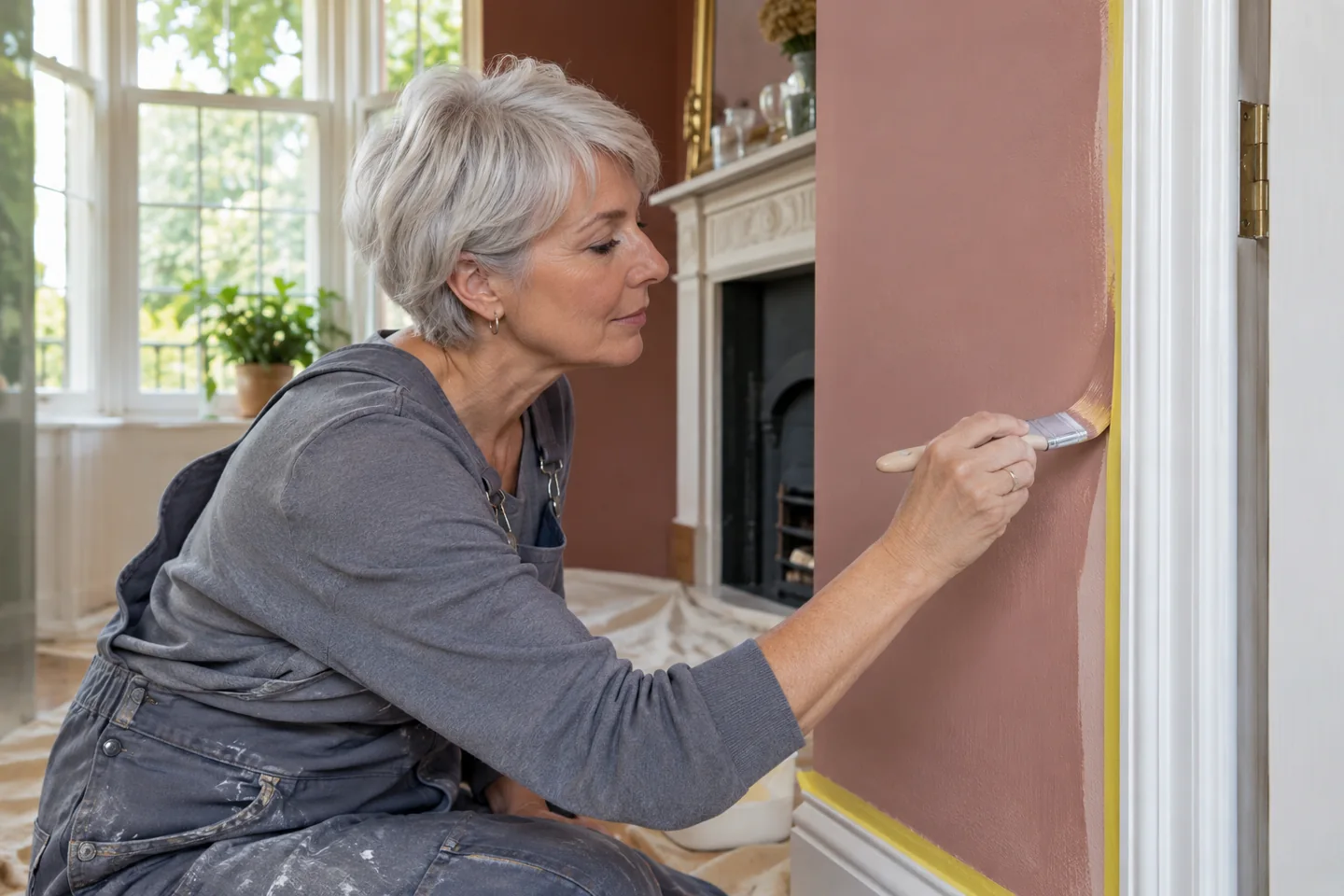
Paint can change the feel of a room while leaving its layout alone. A single wall may provide a background for a piece of furniture or a group of pictures; repainting the whole room can make an uneven collection of surfaces feel more consistent. Neither approach requires adding more objects.
It helps to consider the wall alongside the ceiling, skirting, doors and existing furnishings. A colour that looks quiet on a sample can appear stronger across a large surface. The amount and direction of daylight also change how a finished room looks during the day.
The condition of the surface is part of the decision. Old flaking paint or damaged plaster needs attention before the finish is considered complete. That preparation, together with protection for floors and furniture, belongs in the work plan rather than being treated as an optional extra at the end. See the painting and decorating service for the work we discuss.
THE PERSONAL PART
Pictures that belong together.
Art, photographs, mirrors and clocks can give a room its character. Their relationship to the room often matters as much as the individual pieces: a frame can seem misplaced when it sits too far from the furniture it belongs with, while several smaller pictures may work better as one considered group.
Before fixing anything, look at the overall arrangement, the spaces between the items and the way people use the room. A gallery wall does not need identical frames, but it does benefit from a deliberate layout. Mirrors also need a sensible position for what they reflect, rather than simply occupying the largest available patch of wall.
Accurate measuring and suitable supports help protect both the wall and what is being hung. Weight, frame fittings and wall construction need attention, especially for larger mirrors. The picture hanging and mounting page covers that practical side of the work.
BRINGING THE IDEAS TOGETHER
Choose the change
the room needs.
Not every wall needs storage, a colour feature and a gallery of frames. Decide what is missing first. If the room lacks usable storage, a shelf may do more than another print. If it feels crowded, editing what is already displayed can matter more than adding to it. A quieter background may be enough to make existing pictures stand out.
| What the room needs | A useful change | What to consider |
|---|---|---|
| Space for everyday items | A shelf or wall-mounted unit. | The intended load, wall construction and height. |
| A more consistent backdrop | Fresh paint or a considered feature wall. | Surface condition, light and the adjoining woodwork. |
| A personal focal point | A picture group or a well-positioned mirror. | Overall spacing, furniture below and suitable supports. |
If several changes are planned, the order of work needs thought. Painting, fixing new storage and placing pictures all affect the same surfaces. Discuss the intended finish and positions before arranging the visit so the work can be considered together, including any drying requirements or materials that need to be supplied.
For a rented home, check permission before changing the paintwork or drilling new fixing points. Keep the plan proportionate to the room: a useful shelf, a sound finish and a few pieces hung with care can be enough. The most successful update is often the one that makes the space easier to live in without making the wall work too hard.
KEEP THE ROOM IN VIEW
Start with one
clear purpose.
Storage, colour or something personal: choose the change that answers the room’s need, then plan the practical work around it.