
HOME NOTES / HANDYMAN IN LONDON
A home that works, without the overwhelm.
An everyday approach to noticing faults, making space and keeping a useful record.

IN THIS ARTICLE
A fresh-looking room and a well-functioning room are related, but they are not quite the same thing. Cleaning can make a space more comfortable and reveal a defect; it cannot repair a loose hinge or explain a recurring damp mark. Keeping these different tasks in view helps household upkeep feel more manageable. You can decide what needs routine attention, what needs an assessment and what is simply an improvement you would like to make.
Give small faults a clear description.
A loose handle, a drawer that catches or a shelf that has begun to move may seem too minor to record. Yet an unclear list of “little jobs” is difficult to act on later. Write down the room and what is happening. Add a photograph if it helps explain the fitting or its position, and note whether the problem is new or has already been adjusted before.
Keep observations separate from assumptions about the repair. A catching door does not automatically need the same adjustment as another door in the property. The material, fitting and cause all matter. Where storage is involved, the shelf and wall-unit service information helps identify what can be discussed. Stop adding weight to a fitting that appears insecure while arranging appropriate advice.
Use cleaning to see the room more clearly.
Clutter can hide the parts of a room that are difficult to reach. An accessible skirting board, an uncluttered under-sink cupboard or a clear section of floor is easier to observe and easier to work around. That is a practical reason to review storage occasionally, rather than treating tidiness as a standard that the whole house must meet at once.
Deal with cleaning and condition as different questions. If a mark remains or returns, record what you can see instead of repeatedly covering it with furniture or an accessory. Heavy objects and appliances should not be moved casually to complete a cleaning list. Explain any access problem when arranging work so that the visit can be planned around the actual room.
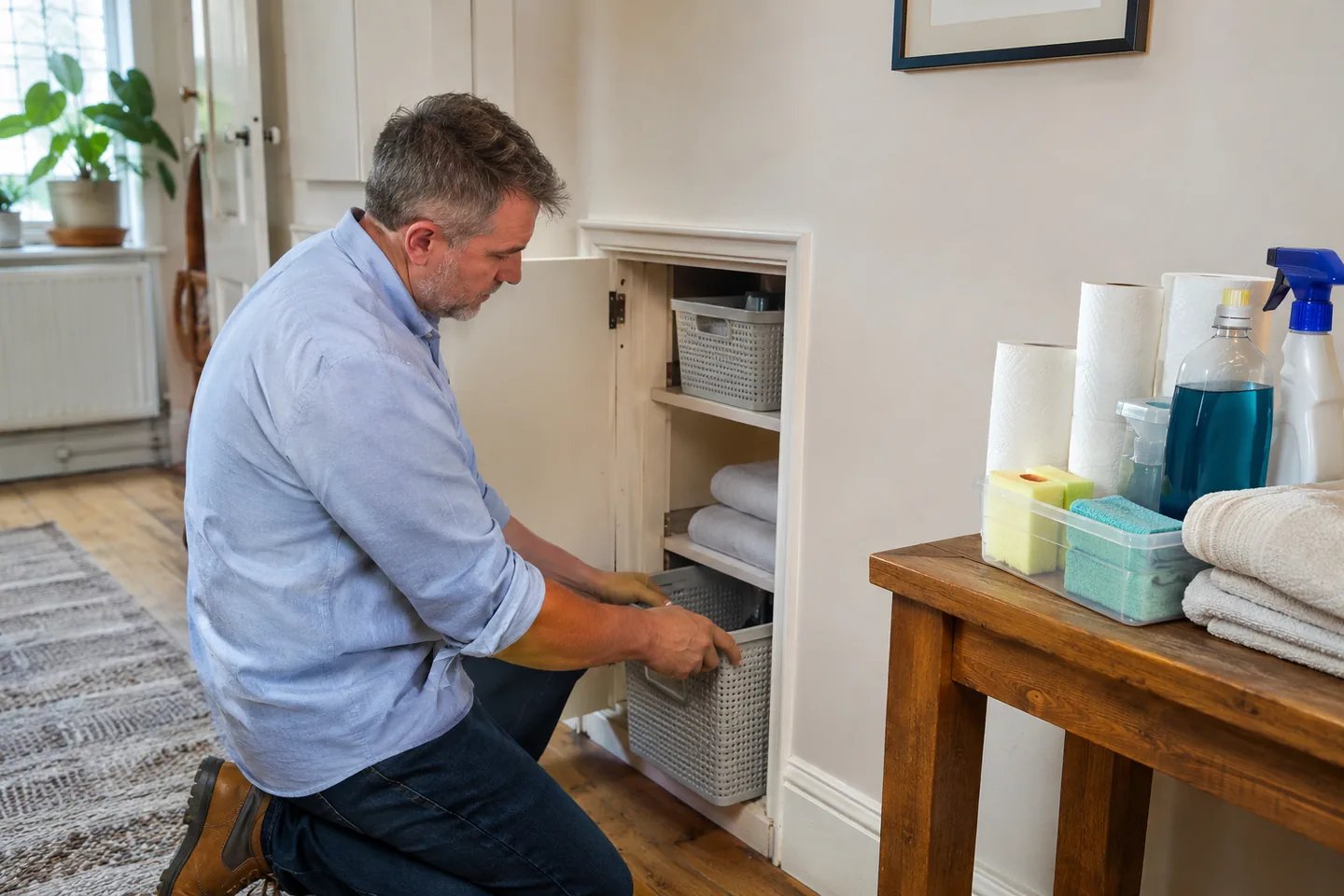
Revisit familiar places as the seasons change.
Draughts, moisture and the movement of timber fittings can be more noticeable at different times of year. A seasonal reminder is useful because it prompts you to compare what you see with earlier notes. It does not mean every change has the same cause, or that a quick visual check can establish the condition of concealed parts of the building.
Outside, look only from safely accessible positions. A concern about a roofline, high gutter or other awkward location is something to describe to the relevant professional. Indoors, note the exact place and circumstances of a recurring issue. The article on year-round home maintenance considers how to keep those observations together without creating a burdensome inspection routine.
Make function part of a room refresh.
When thinking about a room, ask what is awkward in daily use. A shelf may be out of reach, a desk may lack useful storage or the curtains may interfere with nearby furniture. These are different questions from whether the colour scheme needs updating. Start with the practical difficulty, then decide whether an installation or a change of position would answer it.
Furniture, wall fittings and decorative finishes can be planned together when they affect the same area. The furniture assembly page explains the information needed for new products. Keep instructions and product references available, and do not assume that extra wall mounting or alterations are included simply because a piece is being assembled in the room.
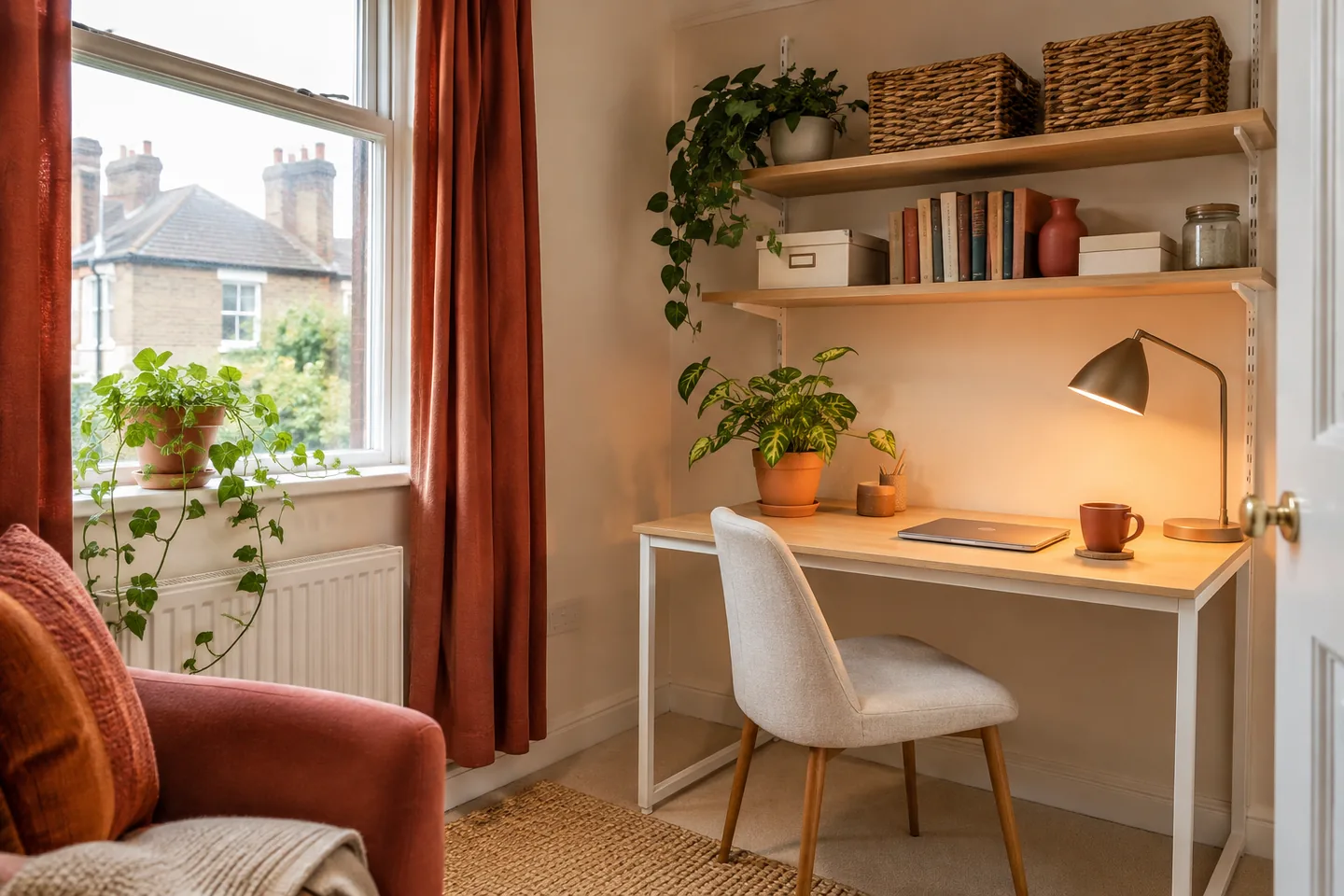
Keep the routine small enough to repeat.
A notebook or simple document can hold the room, the issue, the action taken and anything still waiting for attention. It is particularly useful when a landlord, agent or another member of the household may need to understand the repair history. Keep material details and product instructions where they can be found again, rather than relying on memory after the work is complete.
Choose reminders that help you revisit the record instead of demanding a complete household review every time. Some jobs will be suitable to discuss together; others need a specialist or separate planning. A manageable routine does not promise a fault-free home. It makes it easier to notice what has changed and arrange the right next step without the entire list becoming urgent at once.