
HOME NOTES / HANDYMAN AND BUILDERS, HANDYMAN IN LONDON
A manageable rhythm for home repairs.
Start with the rooms that work hardest, then make the maintenance list easier to act on.
IN THIS ARTICLE
The jobs that interrupt a household are often familiar ones: a dripping tap, a cupboard that catches or a fitting that has begun to work loose. It is tempting to wait until several become annoying enough to justify a call. A more useful approach is to record them as they appear, decide which need assessment promptly and group the remaining work into a list that someone else can understand.
Give kitchens and bathrooms their own list.
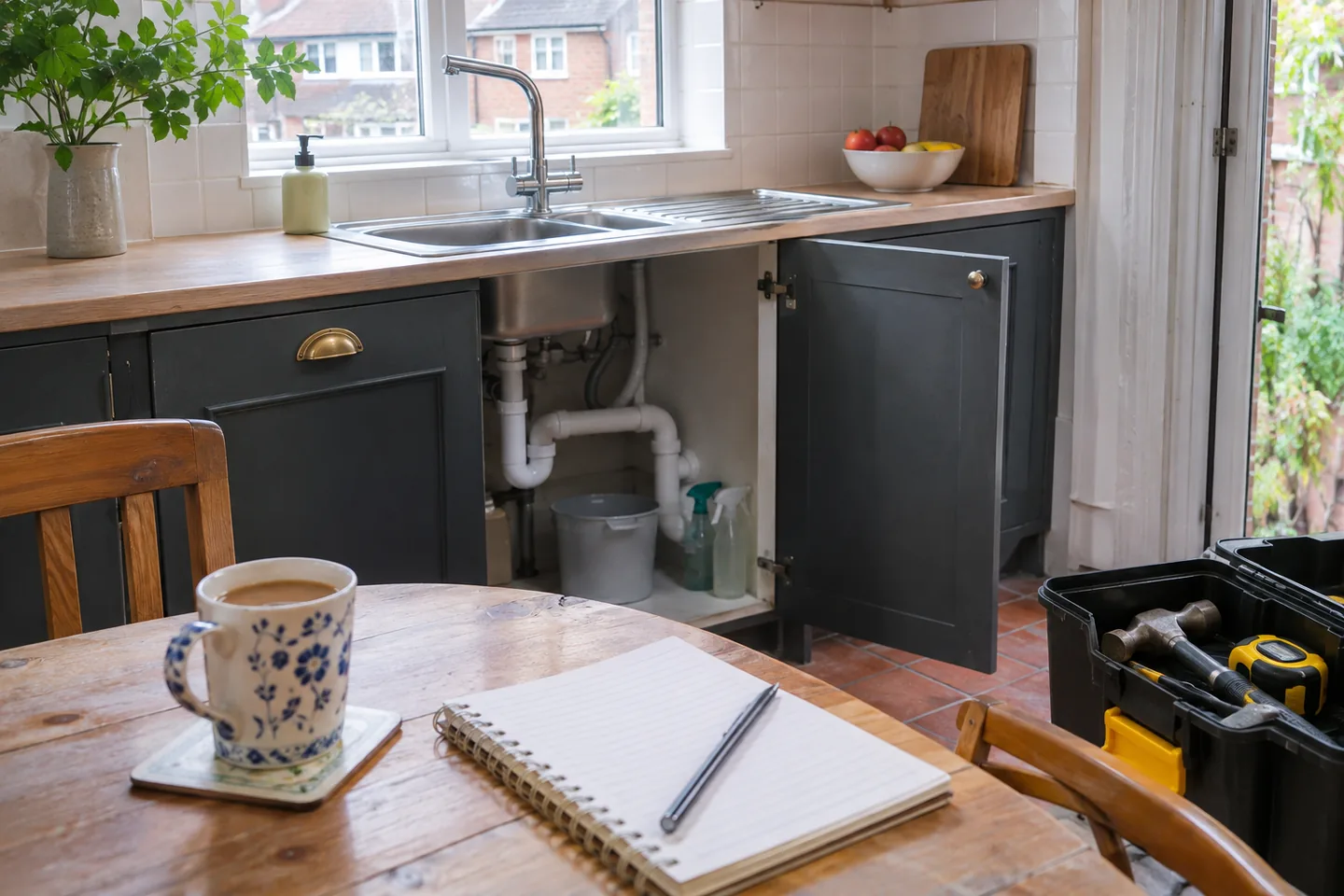
Kitchens and bathrooms contain many fittings that are used repeatedly throughout the day. Changes in the way a tap, cupboard or door behaves can be easier to notice here than in a rarely used room. Keep descriptions specific. Where is the water appearing? Which hinge is loose? Does the drawer catch only when a neighbouring door is open? Those observations help explain the problem without attempting a diagnosis.
A patch of damaged grout, a faulty light and a dripping tap involve different materials and may need different trades. Do not assume that booking a general maintenance visit automatically covers all three. The plumbing repairs page sets out the work to discuss for household water fittings. Electrical faults should be described separately and assessed by the appropriate specialist.
Clear enough space to see the problem.
A tidy cupboard or an accessible corner makes it easier to observe a fitting and arrange work on it. That is a practical benefit of regular cleaning, beyond appearance. Do not conceal an unexplained damp mark or keep pushing objects against an unstable shelf. Record what is happening and keep the relevant area available for an assessment.
This does not require reorganising the entire house before every repair. Focus on the route to the job and the immediate working area. If moving a heavy appliance or item of furniture is involved, explain that before booking rather than assuming it is a simple part of access. Good information about the space is as useful as a clear photograph of the fitting itself.
Notice how familiar fittings behave.
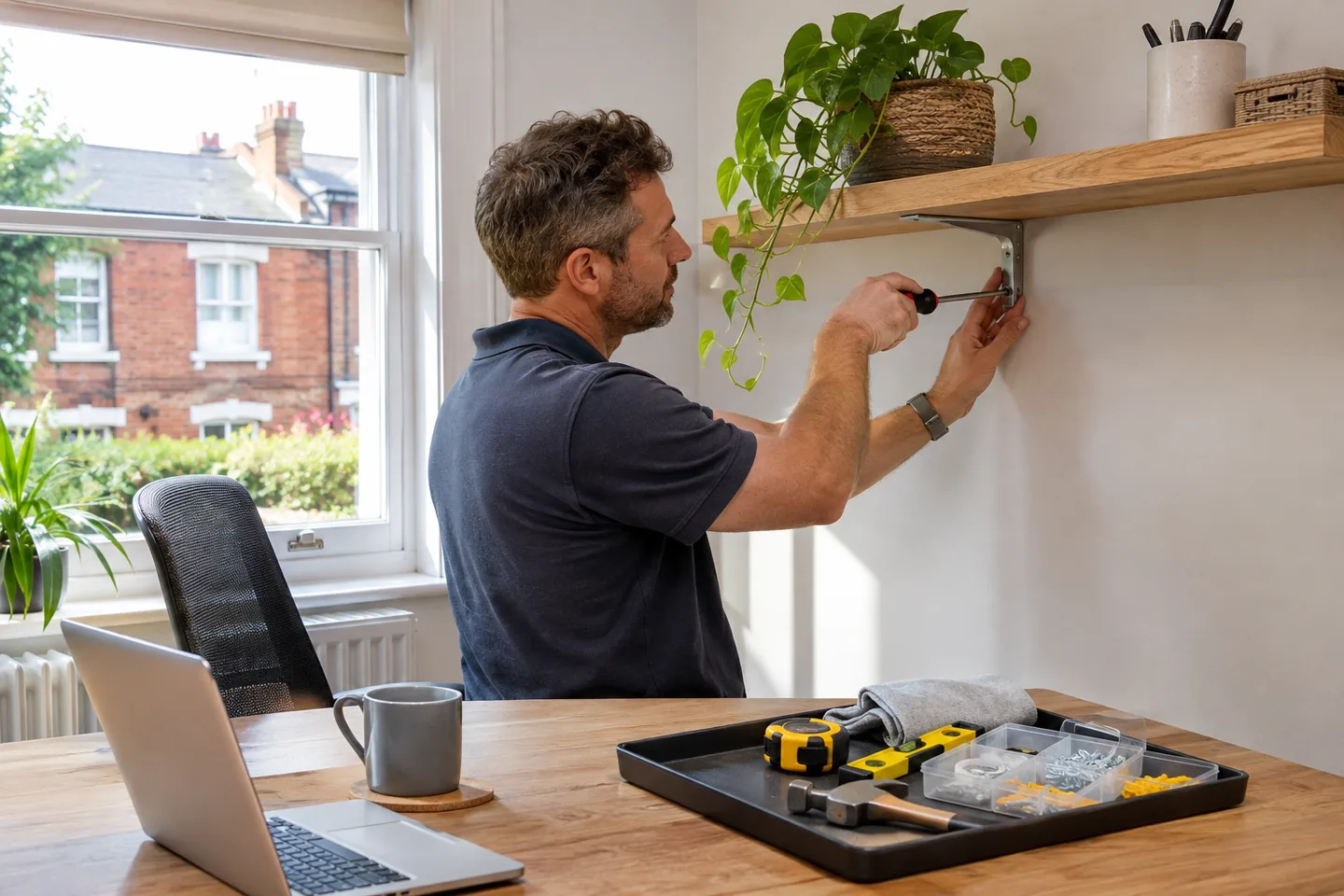
Handles, door hinges, curtain brackets and cupboard fittings are easy to ignore because they remain in use even when something is wrong. A change in movement or alignment can provide a useful reason to look more closely. Note whether a problem is new, recurring or associated with a recent change elsewhere in the room, such as a floor being fitted.
Avoid turning a list of observations into a succession of improvised repairs. The right adjustment depends on the item, material and cause of the problem. If a wooden door or cupboard needs attention, the carpentry service information explains the types of work that can be assessed. A useful description allows a repair to be considered on its own terms.
Use seasonal changes as a reminder.
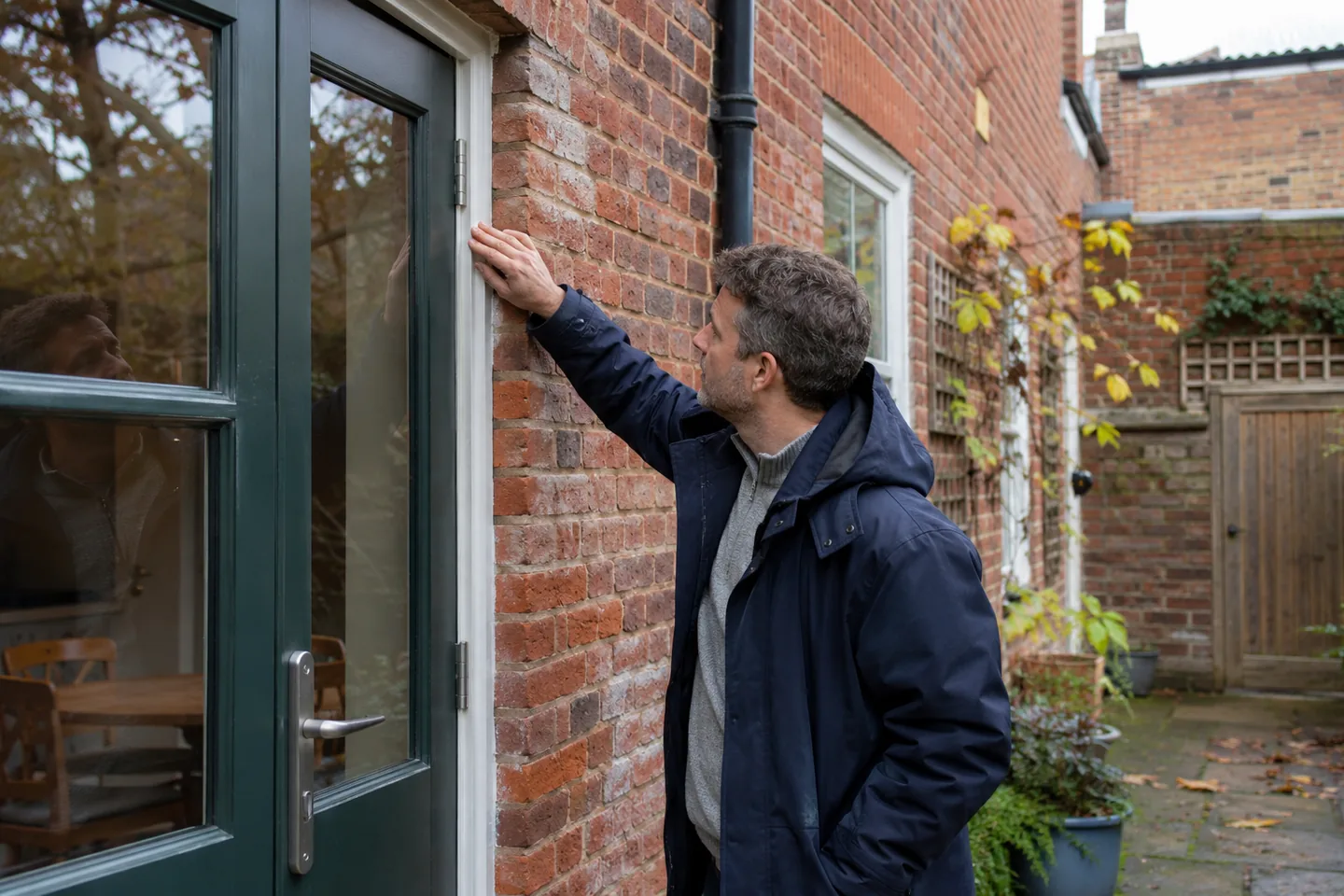
The weather can prompt a review of the outside of a property and of earlier notes about draughts or moisture. Look from places that are safely accessible; a concern about a roof or gutter is a reason to arrange suitable help, not to climb to confirm it. Keep external work distinct from the indoor fitting and repair jobs on your list.
Inside, revisit items that behaved differently in earlier seasons. A recurring door problem or mark around a window is easier to explain if you know when it appeared and what has changed. The purpose is not to predict every future fault. It is to avoid losing the history of something that has already needed attention and may require a more considered assessment.
Make the booking match the list.
Before arranging work, group tasks by the room and the type of help needed. Include product details, photographs and anything already supplied. If there are several small repairs, explain the whole list and ask how it can be planned. Some tasks may fit together; others may require another trade, a different appointment or additional materials.
For another way to organise the same information, read the year-round maintenance article. The best routine is the one that turns an observation into a clear next step. It does not need to become a demanding household project, and it should never encourage you to investigate unfamiliar electrical, gas or other specialist systems yourself.