
HOME NOTES / HANDYMAN AND BUILDERS, HANDYMAN IN LONDON
A home looked after, through the year.
A practical way to notice wear, organise repairs and prepare for changes in the weather.
IN THIS ARTICLE
Home maintenance becomes difficult when every small job seems to arrive at once. A loose handle, a damp mark and an awkward cupboard door may have different causes, yet they often end up on the same unfinished list. A simple record of what has changed makes that list easier to use. It gives you something more useful than a vague intention to sort the house out when there is time.
Start with what has changed.
Pay attention to the fittings you use every day. A door that previously closed easily, a tap that has begun to drip or a floorboard that now moves deserves a note. Record the location and what happens, rather than trying to diagnose the cause. A photograph can help show a small change that is difficult to describe over the telephone.
Look beyond appearance when deciding what to put first. A slightly scuffed wall and a loose shelf do not ask the same question: one concerns the finish, while the other concerns the way an item is supported. If a fitting feels insecure, avoid putting more strain on it while you arrange an assessment. The aim of a maintenance list is to make those distinctions visible.
Let the seasons prompt a review.
Changes in the weather provide a useful reminder to look over the property. Before colder or wetter periods, notice draughts, existing water marks and the condition of accessible exterior woodwork. After rough weather, a ground-level look can reveal something that needs further investigation. Roofs, gutters and work at height need an appropriate professional assessment; observation does not require climbing to reach them.
Inside, use the same review to revisit earlier notes. Has a mark spread? Does the door behave differently as the weather changes? Keeping these observations together is more informative than starting a fresh list every season. It also helps distinguish a recurring problem from a one-off event. A regular review need not become an elaborate inspection of every part of the building.

Make the places you check accessible.
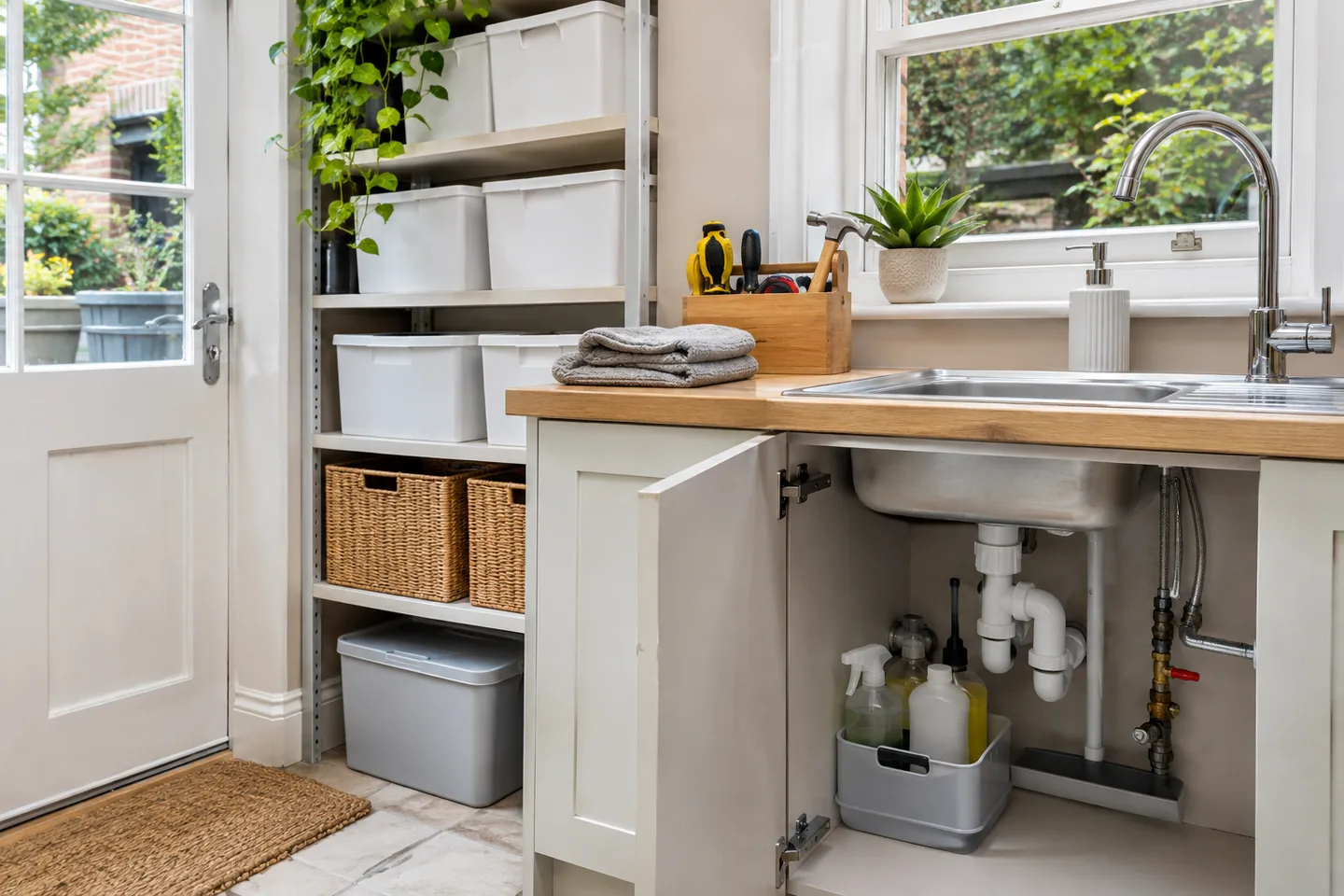
Cleaning and maintenance overlap because a clear surface is easier to inspect. Under-sink cupboards, skirting behind movable furniture and corners around storage can conceal wear simply because they are difficult to see. A sensible clear-out creates access for looking and, later, for carrying out a repair. Do not move heavy furniture or appliances just to complete a checklist without considering how to do so safely.
Storage should help that routine. Shelves and cupboards are useful when their contents are easy to reach and their fixings can still be checked. Overfilling a shelf can make it harder to see whether it is sitting properly. If an installation needs attention, the shelf and wall-unit mounting page explains the work that can be discussed.
Separate comfort improvements from faults.
The original maintenance list also considered lighting, water fittings and the way a home feels in use. These are worth thinking about, but replacing a fitting is not a substitute for investigating a fault. Decide whether the aim is to change how the room works or to address something that has stopped working. That distinction helps when describing the job and choosing the right help.
A photograph, the fitting details and an account of the problem are useful starting points. For water-related faults, consult the plumbing repairs information. Electrical faults and gas or heating-system work require the appropriate specialist rather than being added casually to a general odd-job list. Avoid promises of a particular saving before the actual product, condition and proposed work are known.
Keep a record that earns its keep.
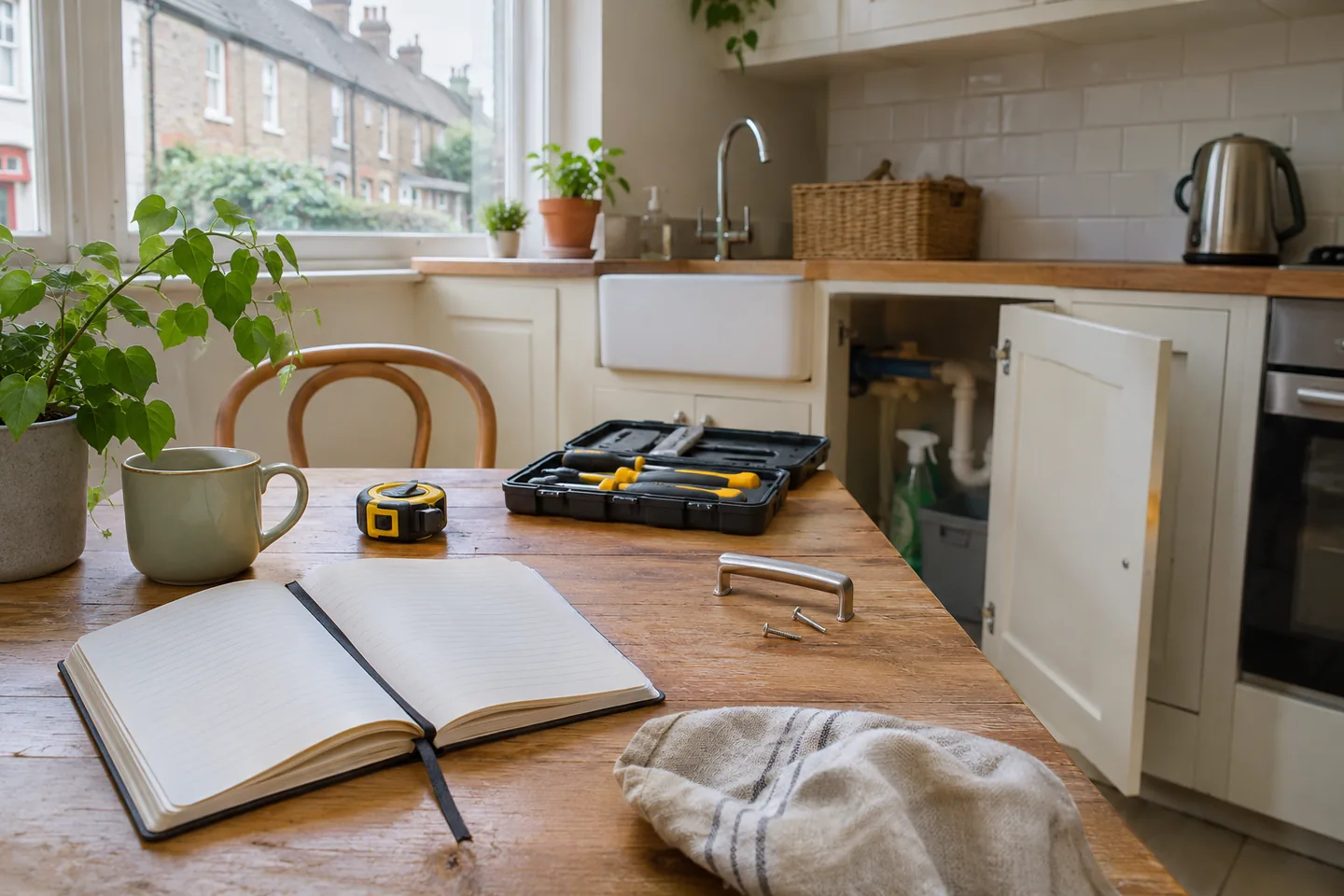
A maintenance record can be a notebook or a short document. Include the room, the issue, when it was noticed and what was done. Keep product instructions and material details alongside relevant repairs when they are available. This makes a later conversation more precise, particularly in a rented or managed property where someone else may need to understand the history.
Bring suitable small jobs together when arranging a visit, while explaining the whole list before booking. Different trades or access arrangements may still be needed. For a more focused look at everyday routines, read how to keep home repairs manageable. A useful routine is one you can return to and update, rather than a perfect schedule that is abandoned after the first week.